
When the sun sets and the hunger pangs start to kick in, I can’t help but crave something hearty yet satisfying. That’s when I discovered this Bibimbap Casserole with Ground Pork, a dish that has quickly become my go-to for weeknight meals. The vibrant colors of sautéed veggies mixed with fluffy rice and flavorful gochujang create a comforting experience that’s hard to resist. Inspired by the classic Korean bibimbap, this casserole is a delightful twist that satisfies the soul and the taste buds.
What I love most about this recipe is its incredible versatility. Whether you’re in the mood for a protein-packed meal or looking to whip up something meatless, there are endless ways to customize it. With just a few simple swaps, you can make it fit your pantry and preferences perfectly. Let’s dive into this quick, enjoyable cooking experience that’s sure to impress even the busiest of cooks!

Why will you love Bibimbap Casserole with Ground Pork?
Endless Customization: You can easily swap proteins or add your favorite veggies, making each casserole unique!
Hearty Comfort: A luscious combination of rice, ground pork, and fresh vegetables delivers a gratifying meal for any occasion.
Time-Saving Delight: Quick preparation and simple cooking steps make it perfect for weeknight dinners.
Flavor Explosion: The gochujang brings a delightful kick, while the garlic and sesame elevate every bite.
Crowd-Pleaser: Guaranteed to impress family and friends, it’s a dish that everyone will love!
Meal Prep Friendly: Prepare the base in advance for easy week-night reheating or freeze it for later.
Bibimbap Casserole with Ground Pork Ingredients
Perfect for customizing your flavors!
For the Sauce
• Gochujang (Korean Hot Pepper Paste) – Provides heat and depth of flavor; substitute with Sambal Oelek for a different heat profile.
• Low Sodium Soy Sauce – Adds umami and saltiness; opt for tamari to make it gluten-free.
• Toasted Sesame Oil – Enhances richness and nutty notes; replace with regular sesame oil if unavailable.
• Honey – Sweetens the dish and balances spice; maple syrup can be used for a vegan alternative.
• Rice Vinegar – Contributes a tangy flavor; use apple cider vinegar if you need a substitute.
For the Casserole
• Ground Pork – Main protein providing fat and flavor; can be swapped for ground chicken, turkey, or tofu for a meatless option.
• Olive Oil – Used for sautéing; it adds healthy fats; coconut oil is a viable alternative.
• Sliced Mushrooms – Adds umami and moisture; sub with zucchini or bell peppers if desired.
• Chopped Yellow Onion – Provides sweetness and depth; replace with shallots or green onions if preferred.
• Garlic – Used for aromatic flavor; garlic powder can be used in a pinch.
For the Veggies
• Chopped Kale – Nutrient-rich green; can be replaced with spinach or Swiss chard.
• Shredded Carrots – Adds sweetness and crunch; use any veggies you have on hand for customization.
For the Base
• Cooked Sticky Rice – Acts as the base; use brown rice or cauliflower rice for healthier options.
• Eggs – Provide richness and texture; omit for a vegan version.
For Garnish
• Sliced Green Onions – Adds freshness and color; can be adjusted based on preference.
• Sriracha Sauce – For added flavor and spice; use more or less based on your heat tolerance.
How to Make Bibimbap Casserole with Ground Pork
-
Preheat your oven to 425°F and generously spray a 3-quart baking dish with non-stick spray. This step ensures your beautiful casserole won’t stick when it’s baked to perfection.
-
Mix together the gochujang, soy sauce, sesame oil, honey, and rice vinegar in a bowl. This sauce will coat all your flavorful ingredients, creating a lip-smacking blend!
-
Heat 1 tablespoon of olive oil in a large Dutch oven over medium-high heat, then add the ground pork. Cook until the pork is no longer pink, about 5 minutes. Once it’s beautifully brown, remove it from the pan and set aside.
-
Sauté the sliced mushrooms, chopped onion, and minced garlic in the same skillet, adding a little more olive oil if necessary. Cook until the mushrooms are golden and the onions are soft.
-
Stir in the chopped kale and shredded carrots, cooking for an additional 2 minutes. You want them bright and slightly tender—just right for mixing!
-
Combine the cooked rice, reserved pork, and all that delicious gochujang mixture in a large bowl. Mix it well, making sure all the ingredients are nicely coated.
-
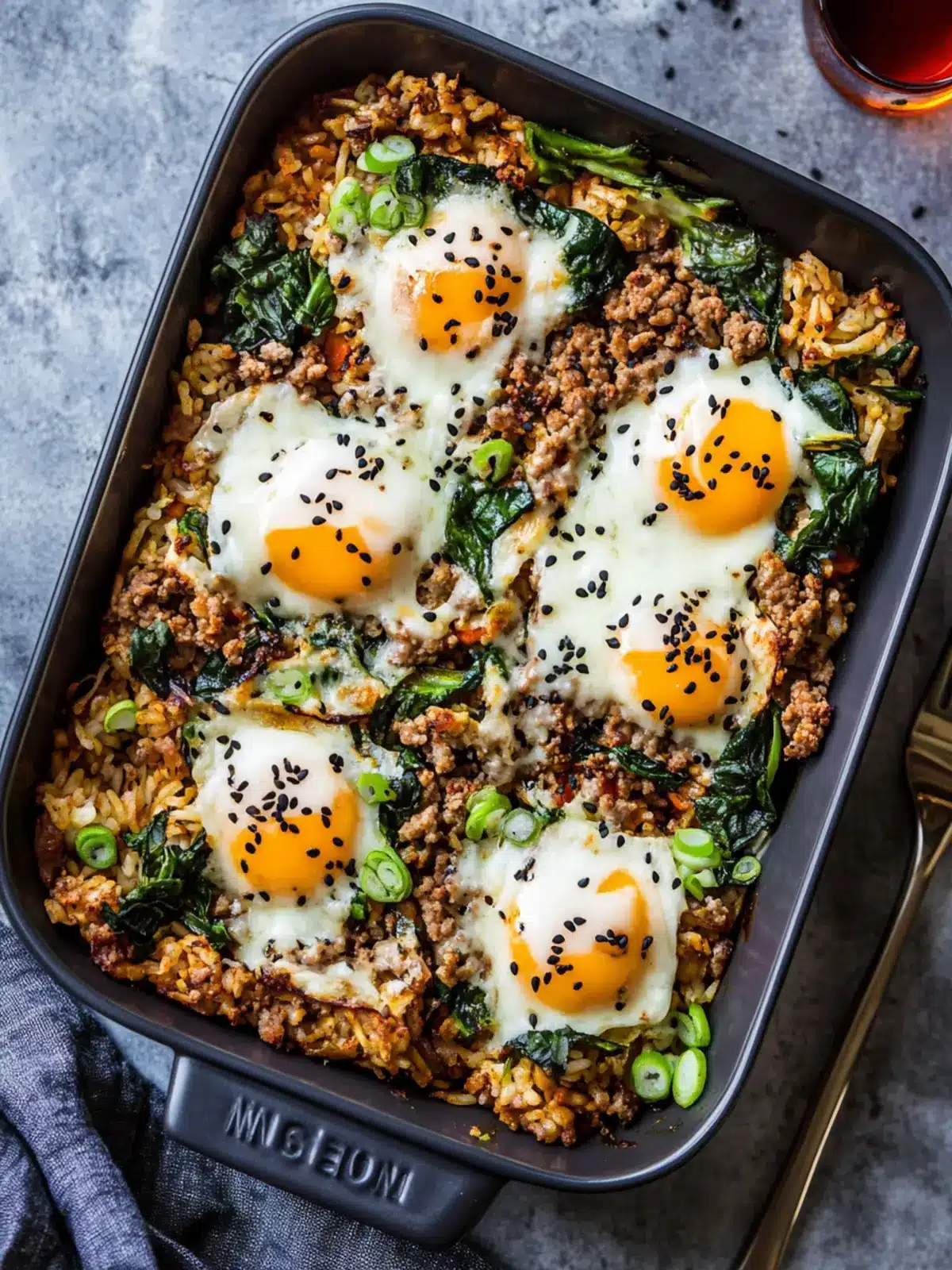
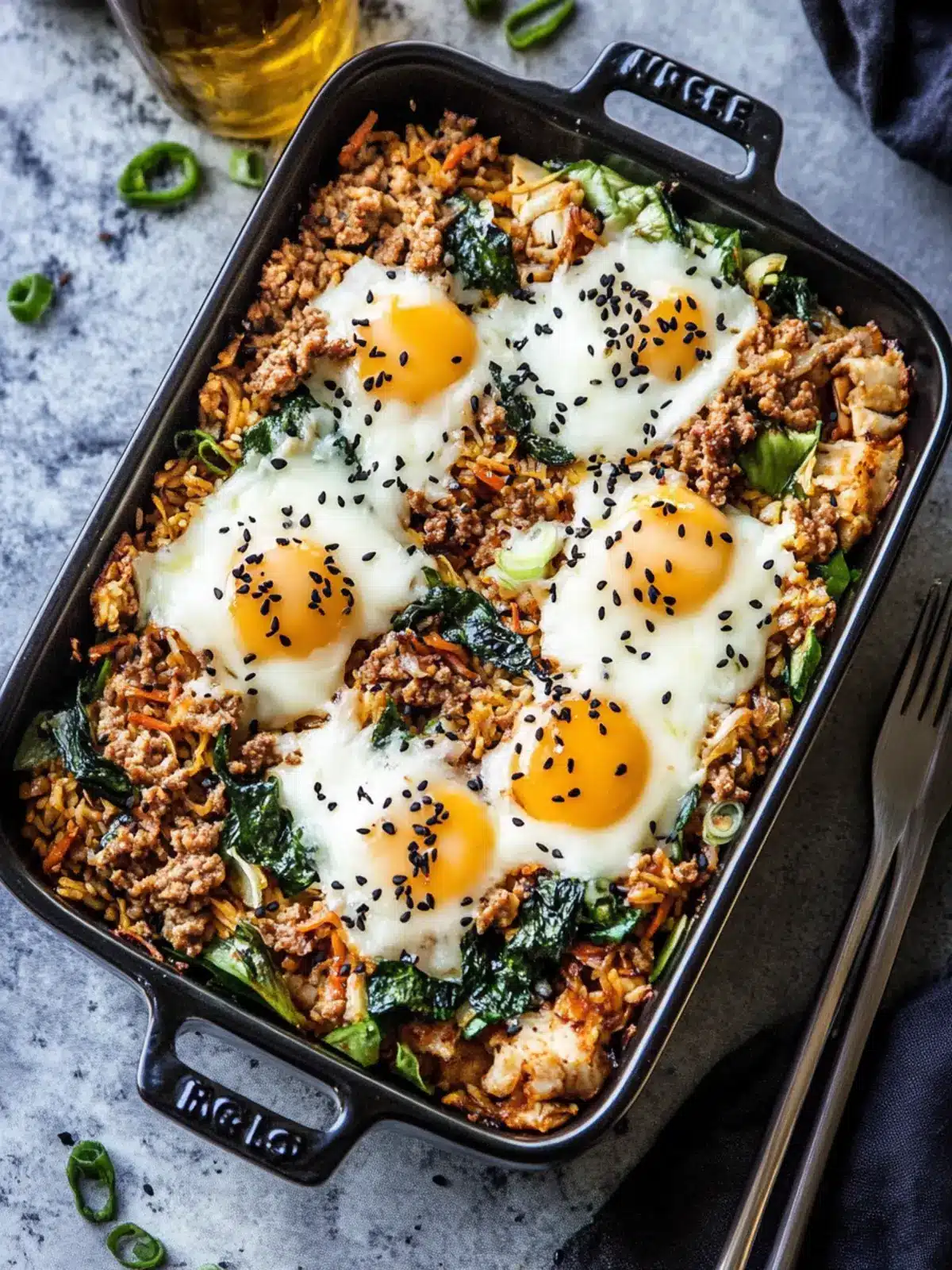
Spoon the mixture into your prepared baking dish, creating six little indents. Crack an egg into each indent, lovingly nesting them amongst the flavorful filling.
-
Bake in your preheated oven for about 20 minutes, or until the eggs are set. The eggs add a lovely richness, making this dish feel extra special.
-
Garnish with sliced green onions and a drizzle of Sriracha sauce before serving. This final touch brings the whole dish together with vibrant flavor!
Optional: Serve warm with kimchi or pickled vegetables on the side for added texture.
Exact quantities are listed in the recipe card below.
Make Ahead Options
Preparing your Bibimbap Casserole with Ground Pork ahead of time is a fantastic way to save time on busy weeknights! You can assemble the casserole (minus the eggs) up to 24 hours in advance and store it covered in the refrigerator. Just mix the gochujang sauce and combine it with the rice, veggies, and cooked pork, then refrigerate it. When you’re ready to enjoy this delicious meal, simply take it out, create the indents for your eggs, and bake. If you want to prep even further in advance, it can also be frozen for up to 3 months; just thaw in the fridge overnight before baking. This ensures you’ll have a comforting, homemade dish that’s just as delicious with minimal effort!
What to Serve with Bibimbap Casserole with Ground Pork?
Pairing a delightful side dish or beverage can elevate your Bibimbap Casserole experience, transforming a great meal into an unforgettable feast.
-
Kimchi: This spicy fermented dish adds a zesty kick and crunchy texture that complements the casserole’s richness beautifully. Its probiotic goodness also promotes gut health!
-
Pickled Vegetables: A refreshing side, these tangy bites cut through the flavors of the casserole, offering a delightful contrast. They bring bright acidity that balances the hearty main dish.
-
Sesame Cucumber Salad: Crisp cucumbers dressed in sesame oil provide a cool and crunchy freshness, enhancing the comforting, warm casserole with each bite.
-
Steamed Broccoli: Lightly steamed broccoli adds a vibrant color along with vitamins and minerals to your meal. Its subtle crunch pairs perfectly with the soft textures in the casserole.
-
Glass Noodles: This chewy dish allows you to soak up the flavorful sauce from the casserole, enhancing every mouthful. It’s an excellent way to add variety to your dinner table.
-
Chilled Soju or Korean Beer: A light, crisp drink option that marries well with the bold flavors of the dish, enhancing the overall dining experience and making it feel festive.
-
Honey Ginger Tea: Warm and soothing, this tea’s sweetness and slight zing can serve as a comforting contrast to the spiciness of the casserole, making it perfect for any meal occasion.
Bibimbap Casserole with Ground Pork Variations
Customize your Bibimbap Casserole with unique and delightful twists that suit your taste buds!
-
Protein Swap: Substitute ground pork with ground chicken, turkey, or tempeh for a meatless delight. Each option brings its own flavor while maintaining the dish’s heartiness.
-
Base Change: Use brown rice or quinoa instead of sticky rice for a nutritious alternative. This adds a lovely nutty flavor and chewy texture!
-
Veggie Boost: Add seasonal vegetables like bell peppers or asparagus to increase nutrition and make the dish even more colorful. The variety truly makes your casserole shine.
-
Soy-Free: Replace low sodium soy sauce with coconut aminos for a gluten-free and soy-free option. You’ll still get that savory profile without the soy!
-
Creamy Addition: Stir in a dollop of Greek yogurt or dairy-free yogurt just before serving for added creaminess and a tangy flavor. It contrasts beautifully with the spice of gochujang.
-
Heat Level: Experiment with the amount of gochujang or include red pepper flakes for tailored spice. Adjust it to your taste for a comfortable kick!
-
Egg Alternatives: Omit the eggs for a fully vegan version or try silken tofu crumbled on top for a similar richness without the eggs.
-
Herb Infusion: Incorporate fresh herbs such as cilantro or mint into the mix or as a garnish, giving your casserole a refreshing twist that brightens every bite.
Expert Tips for Bibimbap Casserole with Ground Pork
-
Room Temperature Pork: Allow ground pork to sit at room temperature before cooking; this ensures even browning and optimal flavor.
-
Don’t Overcrowd: Avoid overcrowding the skillet when sautéing vegetables; this will help maintain the right texture and prevent steaming.
-
Adjust the Spice: Tailor the spice level of your bibimbap casserole by varying the amount of gochujang. More for heat, less for a milder flavor.
-
Mix Ingredients Well: Ensure all ingredients are well combined before baking to guarantee a flavorful and even distribution of flavors throughout the casserole.
-
Let It Rest: Allow the casserole to rest for a few minutes after baking; this helps the flavors meld together and makes serving easier.
Storage Tips for Bibimbap Casserole with Ground Pork
Fridge: Store leftover Bibimbap Casserole in an airtight container for up to 3 days to maintain flavor and texture.
Freezer: Allow the casserole to cool completely, then wrap tightly and freeze for up to 3 months. Omit the eggs before freezing for best results.
Reheating: Thaw overnight in the fridge, then reheat in the oven at 350°F until warmed through. You can also microwave individual portions until hot.
Meal Prep Note: Prepping the casserole base without the eggs is ideal for meal planning, allowing for quick assembly and baking when you’re ready to eat.
Bibimbap Casserole with Ground Pork Recipe FAQs
What should I look for when selecting vegetables for my Bibimbap Casserole?
Absolutely! Choose fresh vegetables that are vibrant and firm. Look for kale that’s deep green and crispy, and select mushrooms that are dry and free of dark spots. If fresh veggies aren’t available, frozen options also work well; just be sure to thaw and drain excess moisture before adding them to the casserole.
How should I store leftovers from the Bibimbap Casserole?
Store leftover Bibimbap Casserole in an airtight container. It can stay fresh in the fridge for up to 3 days; just ensure it’s cooled completely before sealing. For longer storage, freezing is our friend! Wrap the casserole tightly and freeze for up to 3 months. Just skip the eggs before freezing for best results.
Can I freeze the Bibimbap Casserole before baking?
Very! To freeze, prepare the casserole base without the eggs, cool it completely, and then wrap it tightly in plastic wrap and aluminum foil. When you’re ready to bake, thaw it overnight in the refrigerator. Bake at 350°F until warmed through and then add eggs before finishing baking to ensure they come out perfectly.
Why is my casserole too dry or too soggy?
If your Bibimbap Casserole turns out too dry, it could be that the rice was overcooked beforehand or there wasn’t enough sauce mixed in. Make sure to combine everything well before baking and consider adding a splash of water to the dish. On the flip side, if it’s too soggy, avoid overcrowding your skillet when sautéing vegetables, as this can introduce extra moisture.
What if I have dietary restrictions?
No problem at all! This Bibimbap Casserole is highly customizable. You can easily make it gluten-free by using tamari instead of soy sauce, and for those looking to keep it plant-based, simply swap ground pork for tofu or a veggie mix. Additionally, omit the eggs for a vegan-friendly option. Always check labels for allergens if anyone has specific sensitivities!
How can I elevate the flavor of my Bibimbap Casserole?
For a flavor boost, let the ground pork sit at room temperature before cooking to enhance browning. Also, make sure to mix your sauce ingredients well so that the flavors blend beautifully throughout the dish. Experimenting with extra spices or fresh herbs as garnish can also take your casserole to the next level!
Bibimbap Casserole with Ground Pork: Your New Cozy Favorite
Ingredients
Equipment
Method
- Preheat your oven to 425°F and generously spray a 3-quart baking dish with non-stick spray.
- Mix together the gochujang, soy sauce, sesame oil, honey, and rice vinegar in a bowl.
- Heat 1 tablespoon of olive oil in a large Dutch oven over medium-high heat, then add the ground pork. Cook until the pork is no longer pink, about 5 minutes.
- Sauté the sliced mushrooms, chopped onion, and minced garlic in the same skillet until the mushrooms are golden and the onions are soft.
- Stir in the chopped kale and shredded carrots, cooking for an additional 2 minutes.
- Combine the cooked rice, reserved pork, and gochujang mixture in a large bowl.
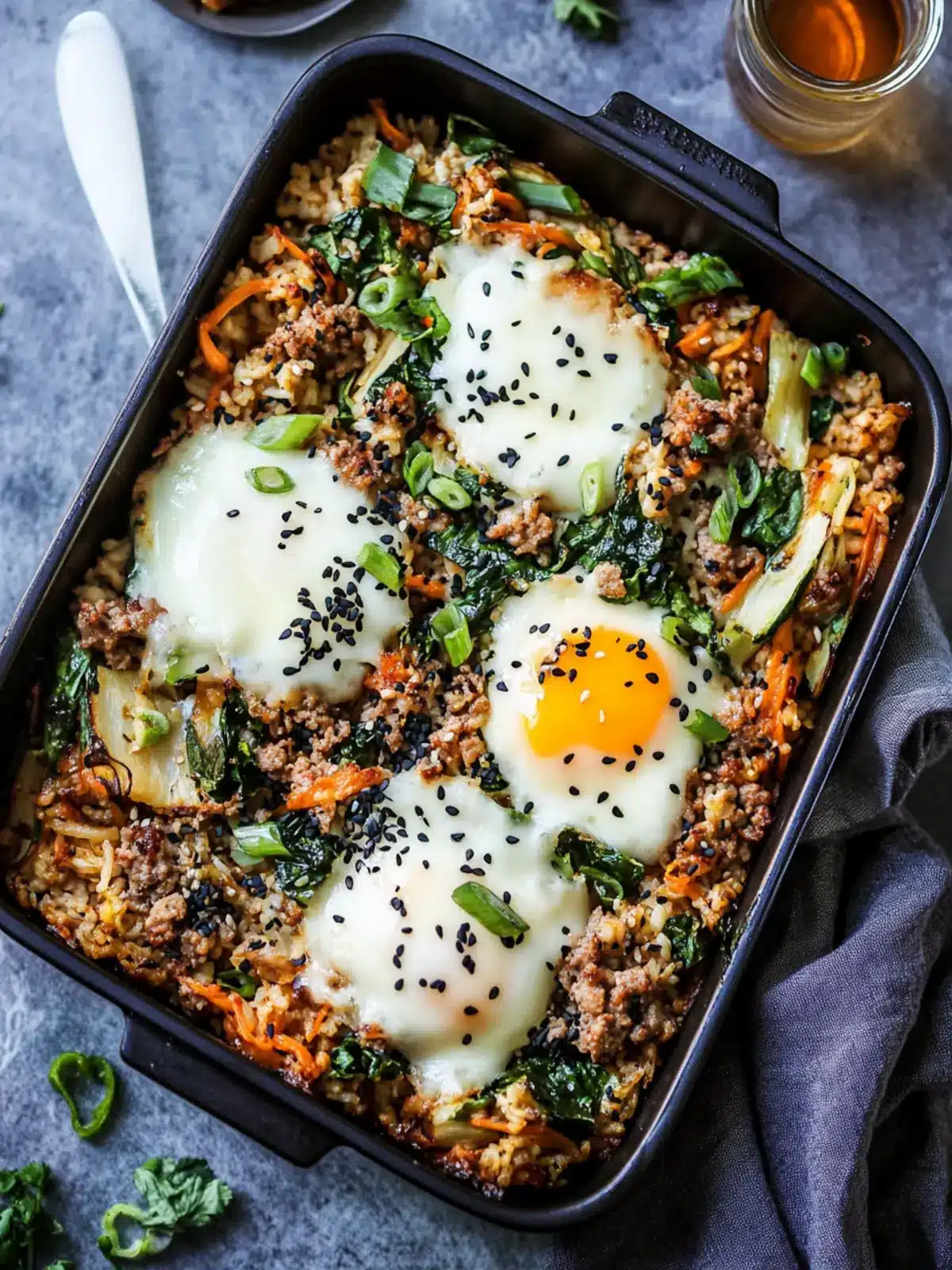
- Spoon the mixture into your prepared baking dish, creating six little indents. Crack an egg into each indent.
- Bake in your preheated oven for about 20 minutes, or until the eggs are set.
- Garnish with sliced green onions and a drizzle of Sriracha sauce before serving.