
As the leaves start to change color and the cool breeze sets in, I find myself craving the warm embrace of hearty comfort food. That’s when my mind drifts to these Savory Korean Beef Noodles. The tender, melt-in-your-mouth beef paired with a rich, aromatic broth gives me that cozy feeling I crave on busy weeknights. The first time I tried this dish, I was amazed at how a handful of simple ingredients could create a meal that feels like a warm hug.
With just a quick toss of garlic, ginger, and gochujang, this dish transforms into an irresistible feast that doesn’t require hours in the kitchen. Whether you’re a home chef or someone simply looking to elevate your midweek meals, this recipe is an effortless solution to bring excitement back to your dinner table. So, gather your ingredients and let’s dive into this quick, hearty recipe that promises to satisfy your cravings and impress your loved ones!

Why Are Korean Beef Noodles So Addictive?
Irresistible Comfort: The fusion of tender beef and rich broth offers a warm, satisfying experience that’s hard to resist.
Quick & Easy: Perfect for busy weeknights, this recipe comes together effortlessly in a slow cooker, making it a true time-saver.
Flavor Explosion: A balance of garlic, ginger, and gochujang creates a decadent taste that elevates your typical noodle dish.
Customizable Delight: You can easily swap beef for chicken or tofu and add your favorite vegetables, ensuring every family member loves it.
Crowd-Pleasing Meal: Serve it at gatherings and watch it disappear—the hearty textures and flavors appeal to everyone.
Embrace the comfort of home-cooked meals today with these Korean Beef Noodles, and discover how simple ingredients can transform into a delightful feast!
Korean Beef Noodles Ingredients
For the Beef
• Beef Chuck – Provides the main protein; adds richness. Tender cuts like brisket can be used as a substitute.
For the Broth
• Beef Broth – Forms the base of the sauce, contributing umami flavor; low-sodium options can reduce salt intake.
• Water – Helps to adjust the consistency of the broth; can be replaced with additional beef broth for richer flavor.
• Soy Sauce – Adds saltiness and depth; tamari can be used for gluten-free versions.
• Brown Sugar – Balances savory elements with sweetness; honey or maple syrup are viable substitutes.
For the Flavoring
• Ginger – Adds warmth and spice; fresh ginger is preferred, but powdered ginger can work in a pinch.
• Garlic – Lends aroma and flavor; fresh is ideal, though garlic powder is a quick alternative.
• Sesame Oil – Provides a nutty depth; can be replaced with canola or olive oil for a lighter taste.
• Black Pepper – Enhances overall flavor; white pepper serves as a substitute for a milder taste.
• Gochujang (Korean Chili Paste) – Infuses spice and complexity; sriracha or red pepper flakes can be used for heat.
For the Noodles
• Noodles (Udon or Ramen) – The backbone of the dish, adding texture; gluten-free noodles can be swapped if needed.
For Garnishing
• Green Onions – Used for garnish, adding freshness; chives are a mild substitute.
• Sesame Seeds – Optional for topping, providing crunch and visual appeal; can omit for a simpler garnish.
• Cilantro – Offers a fresh, herbal note for garnish; parsley can replace it for a different flavor.
Gather these ingredients to create your very own comforting bowl of Korean Beef Noodles, and get ready to indulge in a warm, savory experience!
How to Make Korean Beef Noodles
-
Prepare the Beef: Start by seasoning the beef chunks with black pepper. This small step enhances the flavor, setting a delicious foundation for your dish.
-
Mix the Sauce: In a bowl, whisk together the beef broth, soy sauce, brown sugar, ginger, garlic, sesame oil, and gochujang until the sugar dissolves completely. This mixture should smell heavenly!
-
Place in Slow Cooker: Transfer the seasoned beef into the slow cooker and pour the savory sauce over it. Make sure the beef is well coated for that incredible flavor infusion.
-
Cook: Cover and set the slow cooker to low for 6-8 hours or high for 3-4 hours, until the beef is incredibly tender. The longer, the better—your patience will be rewarded!
-
Prepare Noodles: About 15-20 minutes before the beef is done, cook the noodles according to package instructions. Drain and set aside. They should be just tender but not mushy.
-
Combine: When the beef is fork-tender, gently mix in the cooked noodles, allowing them to absorb that rich broth flavor. This step ensures each bite is flavorful and filling!
-
Serve: Dish out your comforting Korean Beef Noodles into bowls, garnishing with chopped green onions, sesame seeds, and cilantro if desired for an appealing finish.
Optional: Sprinkle with a dash of chili flakes for an extra kick!
Exact quantities are listed in the recipe card below.
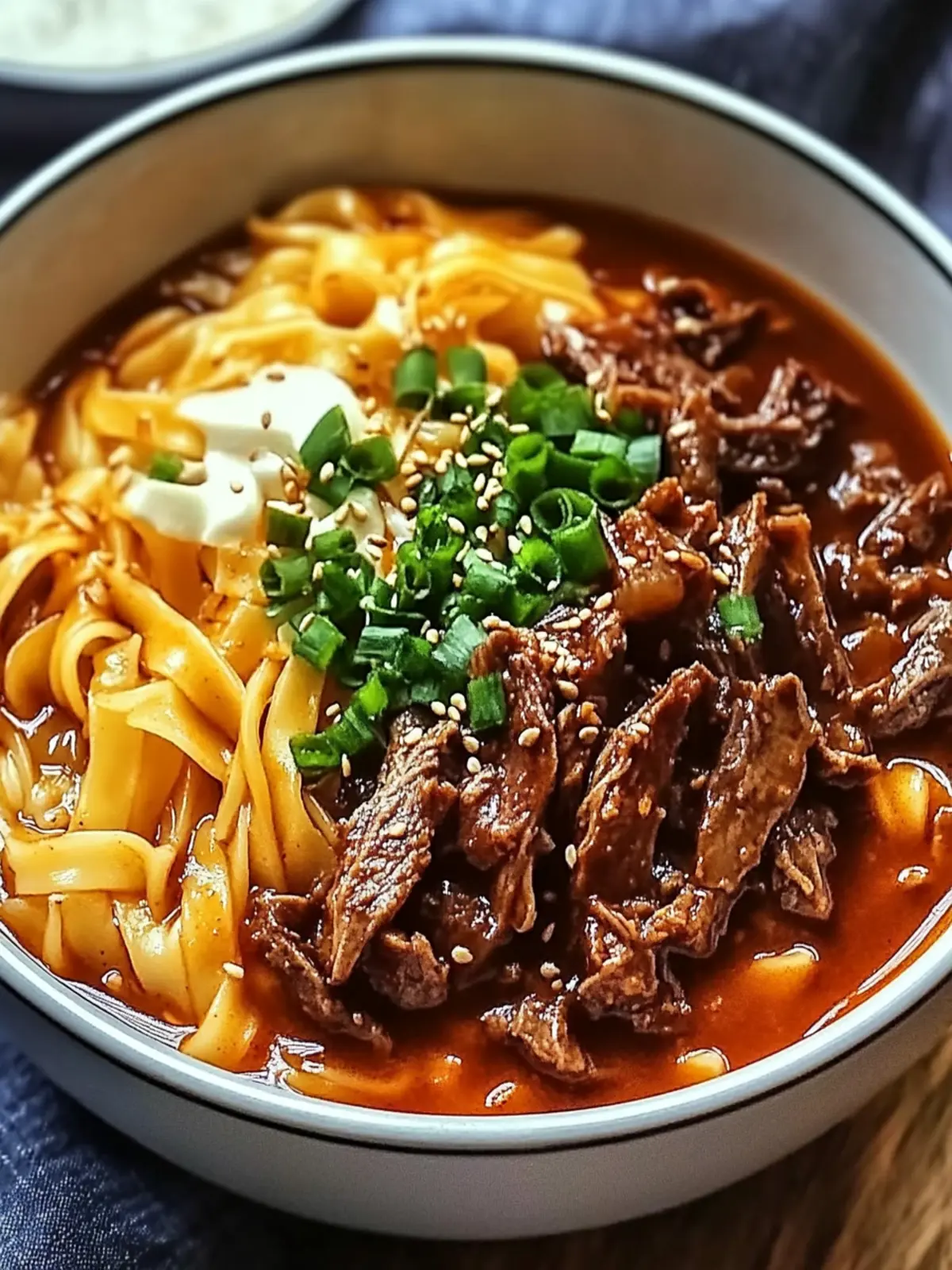
Korean Beef Noodles Variations
Customize your Korean Beef Noodles for an even more delightful experience! Here are some delicious ideas to try.
- Chicken Thighs: Swap beef for chicken thighs for a lighter, but equally satisfying dish. Simply adjust the cooking time, as chicken cooks faster!
- Tofu Option: For a vegetarian twist, use firm or extra-firm tofu. Marinate it in the sauce for about 30 minutes before cooking for maximum flavor.
- Veggie Boost: Add colorful vegetables like bok choy, bell peppers, or snap peas during the last hour of slow cooking. They lend nutrition and vibrant pops of color!
- Rice Noodles: If you’re aiming for a gluten-free version, replace udon or ramen with rice noodles. They’ll absorb the savory broth beautifully.
- Herb Swap: Instead of cilantro, try fresh basil or mint for a unique flavor profile that pairs delightfully with the dish.
- Heat It Up: If you love spice, increase the amount of gochujang or add some sliced fresh chilies in the last hour of cooking for an extra kick!
- Creamy Variations: For a richer broth, stir in a splash of coconut milk just before serving—it adds a lovely creaminess balanced with the heat.
- Crunchy Toppings: Top your noodles with crispy shallots or crushed peanuts for an added crunch that enhances each bite!
These variations will allow you to craft a dish that suits your tastes perfectly, so get creative and enjoy your Korean Beef Noodles!
Expert Tips for Korean Beef Noodles
- Monitor Cooking Time: Avoid overcooking your beef; aim for tender pieces that don’t fall apart. Check periodically to maintain the ideal texture.
- Adjust Spice Level: If you enjoy heat, feel free to increase the gochujang in the sauce. Start with a little and taste as you go for the perfect kick!
- Noodle Type Matters: Use udon or ramen noodles for a chewy texture, but remember to cook them al dente for the best results.
- Beef Alternatives: For a lighter option, swap beef for chicken thighs or tofu. Just adjust cook times accordingly, as they may not require as long.
- Add Veggies: Include colorful vegetables like bok choy or bell peppers in the slow cooker during the last hour for added nutrients and visual appeal.
- Garnish for Flavor: Don’t skip on garnishing your Korean Beef Noodles with fresh green onions, sesame seeds, and cilantro—their flavors brighten the dish beautifully!
Storage Tips for Korean Beef Noodles
Fridge: Store leftovers in an airtight container for up to 3 days. Keeping the noodles separate from the beef will help maintain their texture.
Freezer: If you need to store Korean Beef Noodles longer, freeze in portions for up to 3 months. Ensure they are in airtight bags or containers to prevent freezer burn.
Reheating: To reheat, thaw in the fridge overnight if frozen, then warm gently on the stove with a splash of broth to loosen the noodles and revive the flavors.
Room Temperature: Avoid leaving Korean Beef Noodles out for more than 2 hours to ensure food safety; refrigerate any leftovers promptly.
Make Ahead Options
These Korean Beef Noodles are perfect for meal prep, saving you time on busy weeknights! You can prepare the beef and sauce mixture up to 24 hours in advance; just season the beef, mix the sauce, and store them together in the fridge. When you’re ready to cook, simply transfer the mixture to the slow cooker and cook as directed. The cooked noodles can be stored separately in an airtight container in the refrigerator for up to 3 days. Avoid overcooking by reheating them gently with a splash of broth before serving, ensuring every bite is just as delicious as the first. Enjoy a comforting bowl of Korean Beef Noodles with minimal effort!
What to Serve with Korean Beef Noodles?
Looking to create a deliciously complete meal experience? Here are some fantastic pairings that will enhance your Korean Beef Noodles and make your dinner unforgettable.
-
Steamed Bok Choy: The light crunch and slight bitterness provide a refreshing contrast to the savory noodles. This green vegetable adds a vibrant color and nutritional boost to your plate.
-
Korean Pickled Vegetables: These tangy, spicy accompaniments create a delightful balance, cutting through the richness of the beef dish while offering a pop of flavor in every bite.
-
Crispy Egg Rolls: Their crunchy texture and savory fillings offer a great textural contrast to the tender noodles, making the meal feel festive and fun. Enjoy them as a delightful starter!
-
Sesame Garlic Green Beans: These tender green beans sautéed with sesame oil and garlic bring an earthy depth, complementing the bold flavors of the Korean beef, creating a harmonious experience.
-
Miso Soup: A warm bowl of miso soup adds a light and savory element, providing a soothing start to your meal that pairs perfectly with the hearty noodles.
-
Chilled Cucumber Salad: This refreshing dish adds a cool, crisp element that offsets the warm, rich beef noodles. Tossed in a light vinegar dressing, it brings brightness to the table.
-
Thai Iced Tea: The creamy sweetness of this traditional beverage complements the spice from the gochujang beautifully, making for a satisfying drink alongside your meal.
-
Coconut Rice Pudding: For dessert, this sweet treat offers a creamy finish that balances the savory meal, leaving you with a delightful end to your dining experience.
These pairing suggestions will elevate your Korean Beef Noodles to a feast that the whole family will love!
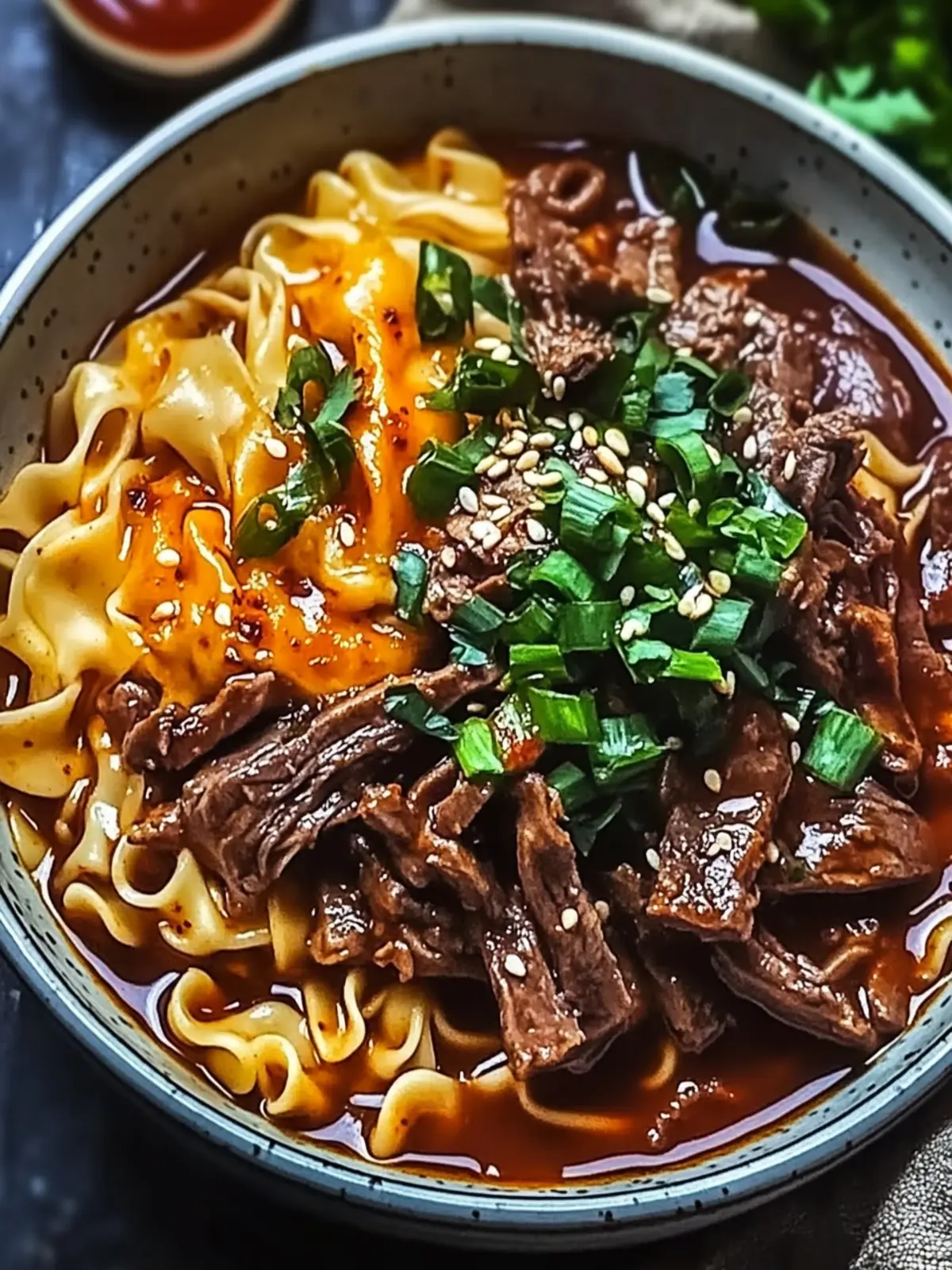
Korean Beef Noodles Recipe FAQs
How do I choose the best beef for Korean Beef Noodles?
Absolutely! Look for well-marbled cuts, like beef chuck or brisket, which provide the tenderness and richness essential for this dish. The marbling ensures that the meat stays juicy and flavorful during long cooking times. Avoid cuts that are too lean, as they may dry out.
How should I store leftover Korean Beef Noodles?
Leftovers can be stored in an airtight container in the fridge for up to 3 days. To keep the noodles from getting mushy, I recommend keeping them separate from the beef until you’re ready to eat again. This way, they retain their texture and can be reheated easily.
Can I freeze Korean Beef Noodles?
Yes, you can! For freezing, divide your noodles and beef mixture into airtight containers or freezer bags, ensuring there’s no excess air, for up to 3 months. When ready to enjoy, thaw in the refrigerator overnight and then reheat gently on the stovetop with a splash of broth to bring back the flavors.
What should I do if my beef turns out tough?
If your beef is tough, it may need more cooking time to break down the fibers. If using a slow cooker, try extending the cooking duration by another hour or so. Alternatively, ensure that the beef is cut into evenly-sized chunks so they cook at the same rate, allowing for uniform tenderness.
Are there any dietary concerns with Korean Beef Noodles?
Very! Consider using gluten-free soy sauce or tamari to accommodate gluten sensitivities. You can also swap out the beef for chicken or tofu as a protein alternative. If allergies are a concern, double-check labels for added ingredients in sauces like gochujang, which may contain allergens. Always feel free to adjust ingredient amounts to suit your personal health needs!
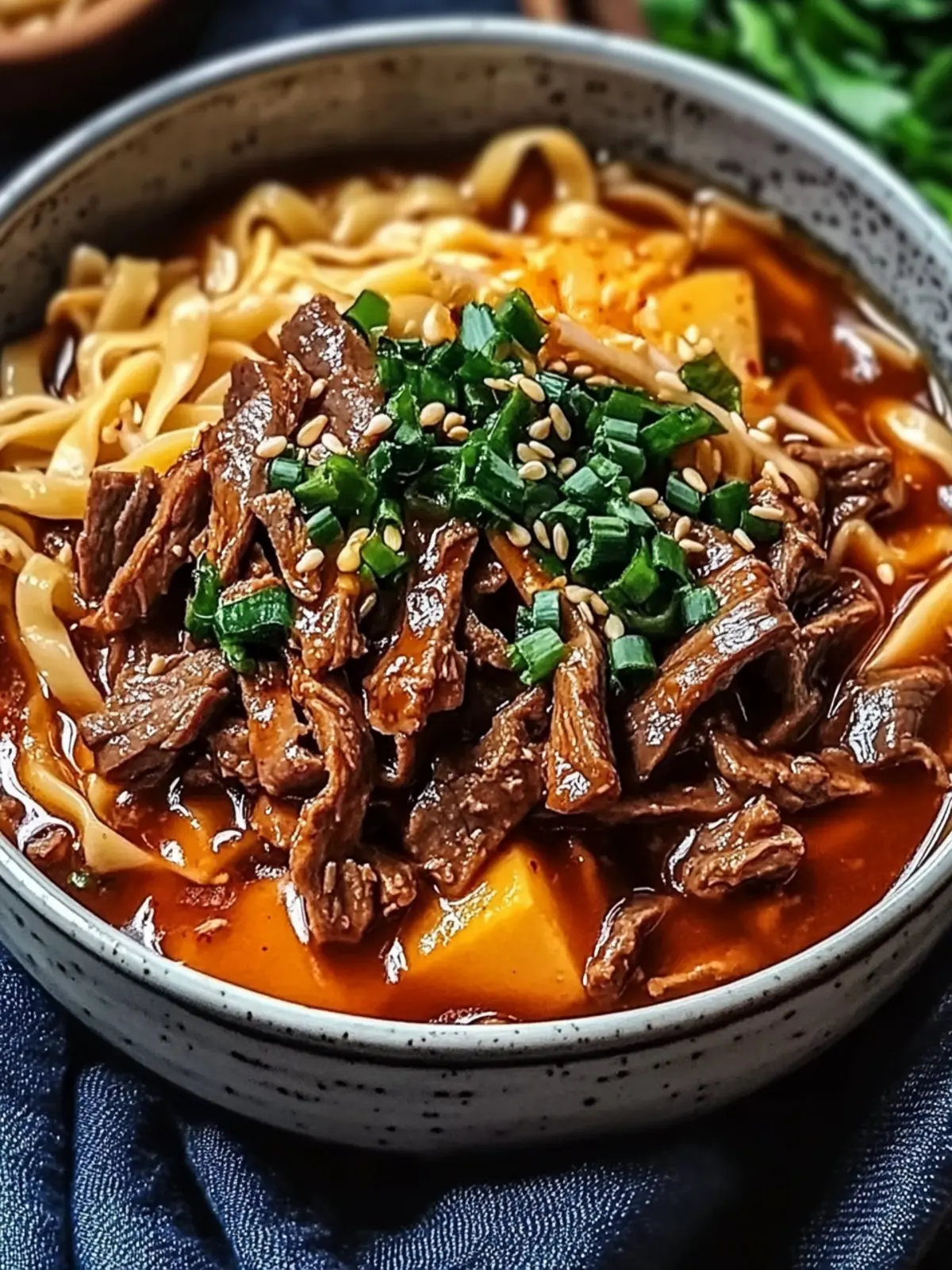
Hearty Korean Beef Noodles for Quick Comfort at Home
Ingredients
Equipment
Method
- Prepare the Beef: Start by seasoning the beef chunks with black pepper.
- Mix the Sauce: In a bowl, whisk together the beef broth, soy sauce, brown sugar, ginger, garlic, sesame oil, and gochujang until the sugar dissolves completely.
- Place in Slow Cooker: Transfer the seasoned beef into the slow cooker and pour the savory sauce over it.
- Cook: Cover and set the slow cooker to low for 6-8 hours or high for 3-4 hours, until the beef is incredibly tender.
- Prepare Noodles: About 15-20 minutes before the beef is done, cook the noodles according to package instructions.
- Combine: When the beef is fork-tender, gently mix in the cooked noodles.
- Serve: Dish out your Korean Beef Noodles into bowls, garnishing with chopped green onions, sesame seeds, and cilantro.