
The moment I first tasted Gochujang, I felt a world of flavors unfold—a spicy, sweet, and umami explosion that instantly became one of my favorite condiments. Today, I’m excited to share my Korean Gochujang Beef Bowls, a dish that transforms humble ground beef into a flavor-packed meal that’s as vibrant as it is delicious.
After an exhausting day, there’s nothing quite like the sizzle of beef mingling with fresh bell peppers and aromatic shallots in the skillet. As I stir in the Gochujang and tamari, the kitchen is filled with a mouthwatering aroma that’s impossible to resist. Paired with a crunchy cucumber salad, this dish is versatile enough to please everyone at the table—whether you’re a devoted foodie or just looking to escape the fast-food routine.
Join me on this culinary journey that brings the heart of Korean cuisine straight to your kitchen. Trust me; your taste buds will thank you!
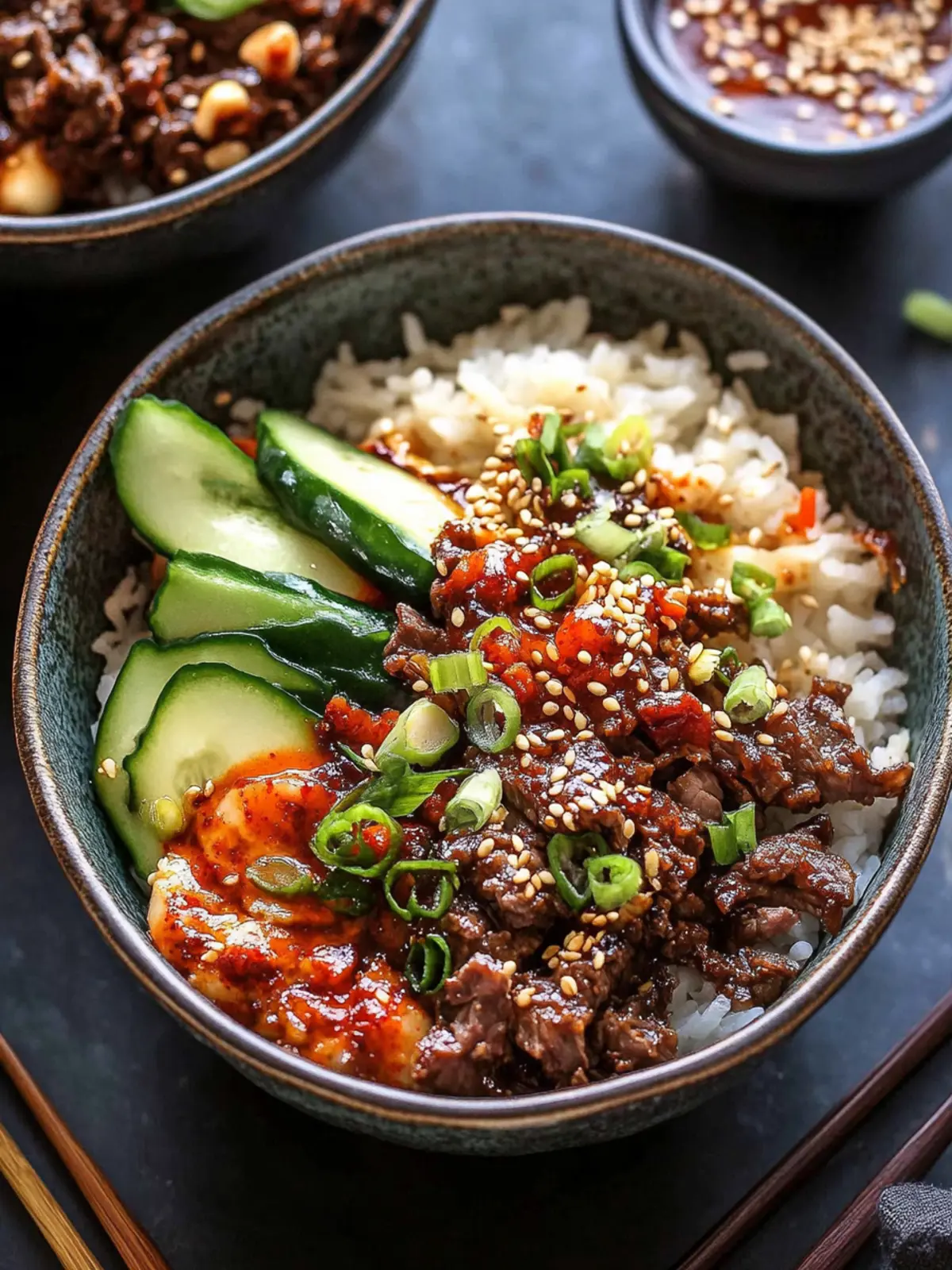
Why love Korean Gochujang Beef Bowls?
Bursting with flavor: Infused with sweet and spicy Gochujang, these bowls deliver an irresistible taste that keeps you coming back for more.
Quick preparation: In just one skillet, you can create a mouthwatering dish that saves you time while impressing your family or guests.
Fresh and crunchy: The cucumber salad adds a refreshing crunch that beautifully complements the savory beef, making each bite a delightful experience.
Versatile serving: Perfect as a standalone meal or served with rice or noodles, this recipe fits any occasion.
Crowd-pleaser: Whether you’re cooking for a quick weeknight dinner or hosting a gathering, everyone will rave about these flavorful bowls!
Try making this scrumptious dish tonight and discover why it’s a delicious alternative to fast food.
Korean Gochujang Beef Bowls Ingredients
For the Beef Mixture
- 1 1/2 pounds ground beef – a rich and flavorful base for your Korean Gochujang Beef Bowls.
- 2 tablespoons butter – adds a lovely richness as you sauté the beef and vegetables.
- 2 bell peppers, sliced – their sweetness balances the heat from the Gochujang.
- 3 shallots, sliced – a milder onion flavor that enhances the savory profile.
- 4 cloves garlic, chopped – infuses the dish with aromatic goodness.
- 1/4 cup pickled ginger – adds a zesty note that brightens the beef.
- 1/2 cup tamari or soy sauce – provides the saltiness and depth needed for umami-rich flavor.
- 2-3 tablespoons Gochujang – the star ingredient for that spicy and fermented kick.
- 2 tablespoons ginger juice – enhances the refreshing spiciness and adds complexity.
- 2 tablespoons maple or honey – a touch of sweetness to balance the spice.
For the Toppings
- 1/4 cup toasted sesame seeds – gives a delightful crunch and nutty flavor.
- 1/3 cup chopped roasted peanuts – adds extra texture and richness.
For the Cucumber Salad
- 4 Persian cucumbers, chopped – crisp and refreshing, perfect for cutting through the savory beef.
- 1 tablespoon Gochujang – adds an extra punch of flavor in the salad.
- 1/4 cup chopped green onion or Thai basil – provides a fresh herbaceous note.
- 2 tablespoons ginger juice or rice vinegar – adds acidity to brighten the salad.
Enjoy bringing these flavors to life in your kitchen with this delightful twist on a classic!
How to Make Korean Gochujang Beef Bowls
-
Brown the beef: In a large skillet, melt the butter over medium heat. Add the ground beef, cooking it until it’s beautifully browned, about 5-7 minutes. Don’t rush this step; let it sizzle for perfect flavor!
-
Sauté the veggies: Toss in the sliced bell peppers, shallots, and chopped garlic. Stir and cook until the vegetables are tender and vibrant, around 3-4 minutes. You want them to retain some crunch!
-
Mix the sauce: Pour in the pickled ginger, tamari or soy sauce, Gochujang, ginger juice, and maple or honey. Simmer the mixture for a few minutes, letting all those bold flavors meld together and create a delicious sauce.
-
Toast the sesame seeds: In a separate dry pan over medium heat, toast the sesame seeds until they turn golden brown, stirring frequently. This usually takes about 2-3 minutes; keep an eye on them so they don’t burn!
-
Combine the salad: In a bowl, mix together the chopped Persian cucumbers, Gochujang, green onion or Thai basil, and ginger juice or rice vinegar. This refreshing salad will provide a wonderful crunch alongside your savory beef.
-
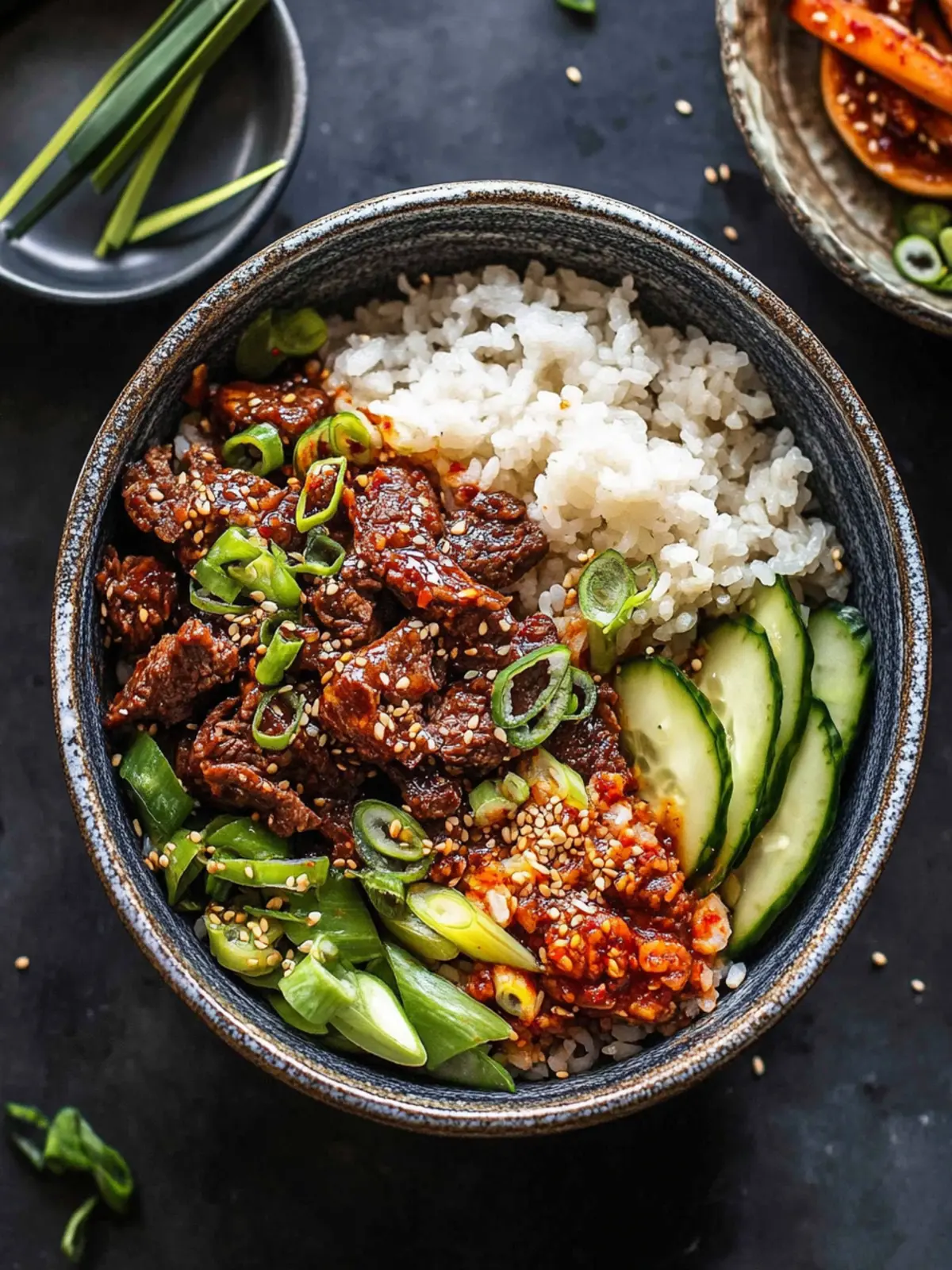
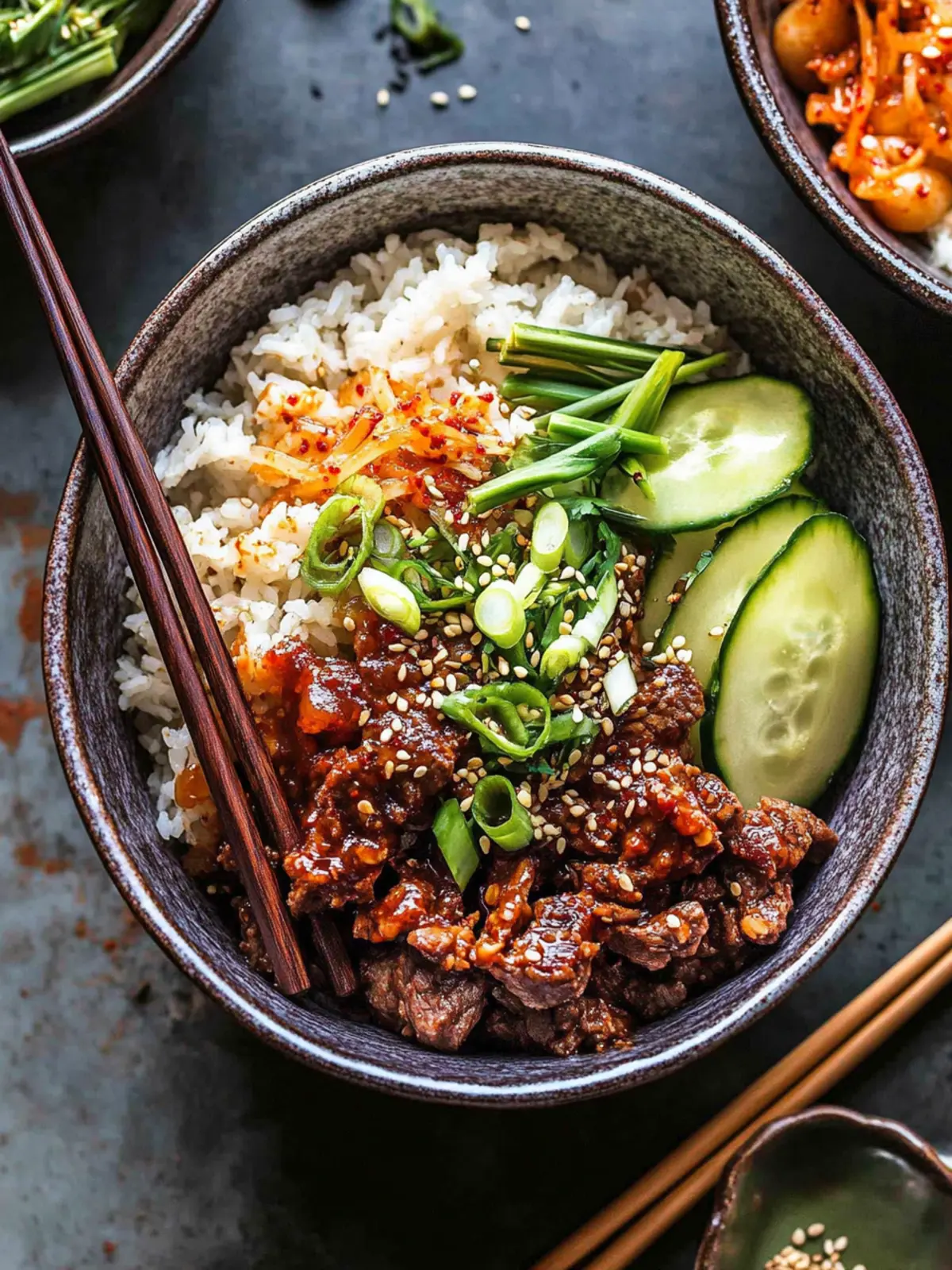
Serve it up: On a plate, layer the beef mixture, topping with toasted sesame seeds. Serve alongside the refreshing cucumber salad for a delightful meal that’s sure to impress!
Optional: Garnish with extra green onions or basil for a pop of color and flavor.
Exact quantities are listed in the recipe card below.
Expert Tips for Korean Gochujang Beef Bowls
-
Choose quality beef: Use fresh ground beef for the best flavor. Leaner cuts will render less fat, making the dish dry; medium-fat is ideal.
-
Controlled spice: Adjust the Gochujang amount depends on your spice tolerance. Start with 2 tablespoons, then taste and add more if desired.
-
Balance flavors: Take a moment to taste and tweak the sauce! If it’s too spicy, a touch more maple or honey can soften the heat perfectly.
-
Perfect prep: Have all your ingredients prepped and within reach before cooking. This keeps the process smooth and helps avoid overcooking the beef or veggies.
-
Add vegetables: Feel free to toss in other colorful veggies like carrots or snap peas to boost nutrition and texture and make your Korean Gochujang Beef Bowls even more vibrant.
-
Rest the salad: Let your cucumber salad sit for a few minutes before serving. This allows the flavors to marry, enhancing the overall dish experience.
Variations & Substitutions for Korean Gochujang Beef Bowls
Feel free to play around with these ideas, making the recipe truly yours as you explore different tastes and textures!
- Ground Turkey: Swap the ground beef for ground turkey for a lighter, leaner option that’s still packed with flavor.
- Vegetarian: Use textured vegetable protein (TVP) or mushrooms as a meaty substitute for a plant-based version that’s just as satisfying.
- Gluten-Free: Replace tamari or soy sauce with coconut aminos for a gluten-free alternative without sacrificing flavor.
- Spicier: Add sliced fresh jalapeños or a sprinkle of red pepper flakes to give your dish an extra kick for heat lovers!
- Herb Boost: Mix in fresh cilantro or mint to the cucumber salad, enhancing the refreshing element with aromatic herbs.
- Creamy Twist: Drizzle sesame or peanut sauce over the beef and salad for a creamier texture that adds richness and depth.
- Fruit Addition: Toss in some diced mango or pineapple into the salad for a sweetness that contrasts beautifully with the spicy beef.
- Rice Variations: Serve over brown rice, quinoa, or cauliflower rice instead of regular rice for different nutritional benefits and textures.
Make Ahead Options
Preparing these Korean Gochujang Beef Bowls ahead of time is a game-changer for busy weeknights! You can brown the ground beef and sauté the vegetables up to 3 days in advance. Just cook them fully, let them cool, and refrigerate in an airtight container. For the cucumber salad, chop the cucumbers and mix in the Gochujang ahead of time, but assemble it fresh just before serving to ensure it stays crunchy and refreshing. When you’re ready to enjoy your meal, simply reheat the beef mixture in a skillet over medium heat for about 5-7 minutes until warmed through. These make-ahead tips will unlock incredible flavors while saving you precious time during the week!
How to Store and Freeze Korean Gochujang Beef Bowls
Fridge: Store leftovers in an airtight container for up to 3 days. Make sure to keep the beef mixture and cucumber salad separate to maintain freshness.
Freezer: You can freeze the beef mixture for up to 3 months. Allow it to cool before transferring to a freezer-safe bag, squeezing out excess air to prevent freezer burn.
Reheating: Thaw overnight in the fridge before reheating. Warm the beef in a skillet over medium heat and reintroduce the cucumber salad fresh for the perfect crunchy contrast.
Airtight Storage: For optimal flavor retention, always use airtight containers for both the beef and the salad—this avoids unwanted moisture and keeps your Korean Gochujang Beef Bowls tasting great!
What to Serve with Korean Gochujang Beef Bowls?
Elevate your meal with delightful side dishes that complement the bold flavors and textures of your beef bowls.
- Fluffy Jasmine Rice: A fragrant base that soaks up the savory sauce perfectly, making each bite a burst of flavor.
- Stir-Fried Bok Choy: Lightly seasoned with garlic and soy, it adds a tender crunch and balances the richness of the beef.
- Asian Slaw: A colorful medley of cabbage, carrots, and a sesame-ginger dressing provides a refreshing crunch that pairs beautifully.
- Sweet Potato Wedges: Roasted to a crisp with a hint of cinnamon, they offer a sweet contrast to the spicy beef.
- Kimchi: This tangy, fermented dish adds an extra layer of zest and richness, enhancing the overall flavor experience.
- Cold Beer or Soju: A chilled drink drastically uplifts the meal’s vibrant flavors while complementing the dish’s spice.
- Mango Sticky Rice: For dessert, a sweet, creamy delight that balances the heat from the beef and satisfies your sweet tooth.
- Coconut Chia Pudding: Light and refreshing, this dessert is a perfect way to cleanse your palate after a spicy meal.
Korean Gochujang Beef Bowls Recipe FAQs
How do I select the best ground beef for the recipe?
Absolutely! When choosing ground beef, look for a mix with around 15-20% fat content for the best flavor and moisture. Leaner cuts can dry out during cooking, while too much fat can lead to an overly greasy dish. Freshness is key, so try to purchase it a day or two before you plan to cook, preferably from a trusted butcher.
How should I store leftovers from Korean Gochujang Beef Bowls?
Store leftovers in an airtight container in the refrigerator for up to 3 days. It’s best to keep the beef mixture and cucumber salad separate to maintain the crunchiness of the salad. Just reheat the beef gently in a skillet when you’re ready to enjoy another meal!
Can I freeze the beef mixture?
Certainly! You can freeze the beef mixture for up to 3 months. First, let it cool, then transfer it into a freezer-safe bag or container, removing as much air as possible to avoid freezer burn. When you’re ready to enjoy it, thaw overnight in the fridge and reheat in a skillet until warmed through.
What should I do if the sauce is too spicy?
If you’ve accidentally made it a bit too spicy, don’t worry—it’s very easy to balance the heat! You can add a teaspoon or two more of maple syrup or honey to the sauce to mellow out the spice. Alternatively, you could also add a splash of coconut milk or extra ginger juice to create a creamier, cooler sauce. Taste as you go until you find your perfect harmony!
Are there any dietary concerns I should consider?
Yes! The recipe contains soy sauce, which is not suitable for those with soy allergies. You can substitute with coconut aminos as a soy-free option. Additionally, be aware that the Gochujang can vary in spice levels, so if you’re cooking for someone with a mild palate or children, start with less Gochujang and adjust. Always ensure that any nuts are safe for those with nut allergies if you’re serving a crowd.
How do I know if my cucumbers are fresh?
When selecting cucumbers, you want to look for ones that are firm, smooth, and free from dark spots or blemishes. Cucumbers should feel heavy for their size and have a vibrant green color. If they have a dull appearance or have soft spots, they may be old and not as fresh. Opt for Persian cucumbers, which are crunchier and sweeter than other varieties!
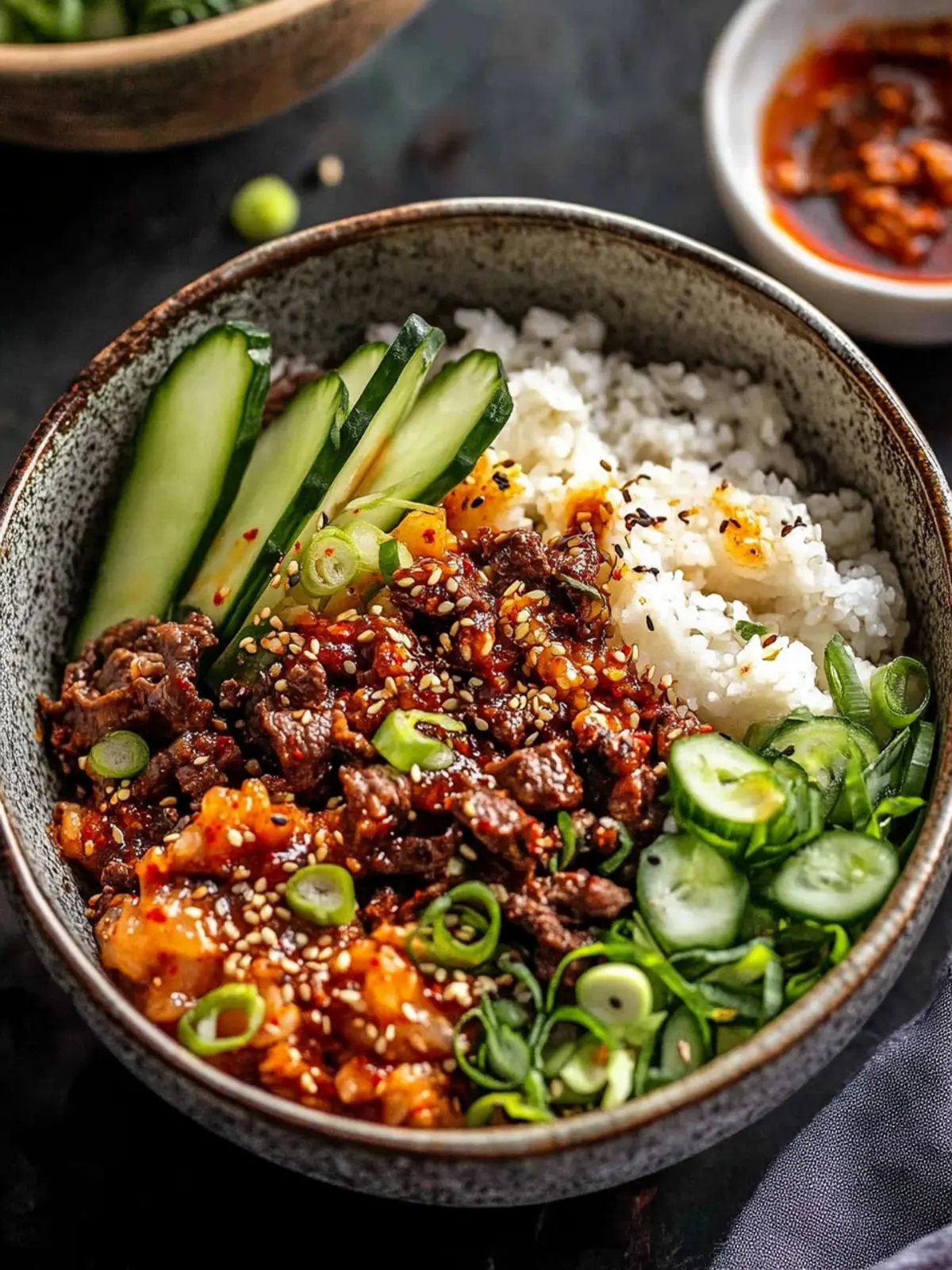
Korean Gochujang Beef Bowls with Crunchy Cucumber Salad
Ingredients
Equipment
Method
- In a large skillet, melt the butter over medium heat. Add the ground beef, cooking it until it’s beautifully browned, about 5-7 minutes.
- Toss in the sliced bell peppers, shallots, and chopped garlic. Cook until the vegetables are tender, around 3-4 minutes.
- Pour in the pickled ginger, tamari or soy sauce, Gochujang, ginger juice, and maple or honey. Simmer for a few minutes.
- In a separate pan over medium heat, toast the sesame seeds until golden brown, about 2-3 minutes.
- Mix together the chopped Persian cucumbers, Gochujang, green onion or Thai basil, and ginger juice or rice vinegar.
- Layer the beef mixture on a plate, topping with toasted sesame seeds. Serve alongside the cucumber salad.