
The moment the first chill of autumn settles in, I find myself craving something warm, vibrant, and bursting with flavor—like Jjamppong, the beloved Korean seafood noodle soup. Imagine the rich aroma of sizzling garlic mingling with the ocean-fresh scent of shrimp, clams, and squid. Each spoonful draws you into a comforting embrace, transporting you to a bustling street market in Busan.
After a week of fast food and takeout, the thought of making this savory delight feels like a joyous declaration of love for homemade cooking. And you know what? This dish doesn’t require a culinary degree! With a handful of fresh ingredients and a simple method, Jjamppong comes together quickly to wow your taste buds and impress your dinner guests. So, roll up your sleeves and let’s dive into this delightful bowl of seafood goodness that will surely make your kitchen the star of the show!
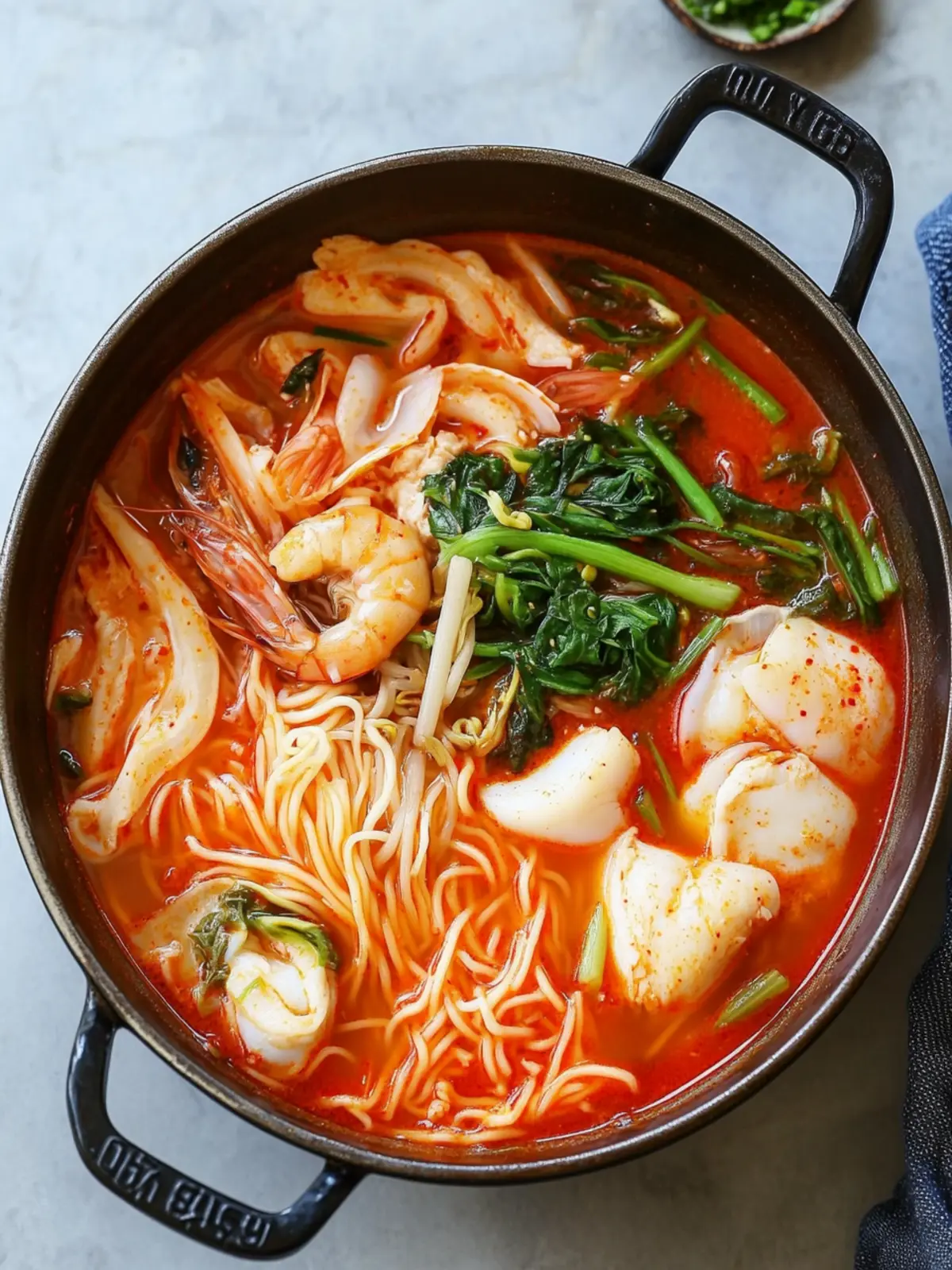
Why is Jjamppong a must-try recipe?
Flavor Explosion: Dive into a bowl that’s a celebration of vibrant flavors, combining the spice of gochujang with the freshness of seafood.
Quick and Easy: You don’t need to spend hours in the kitchen—this recipe comes together in no time, making it perfect for a weeknight meal.
Comfort in a Bowl: Experience the warmth and richness of this Korean classic, ideal for cozy evenings or when you’re craving something hearty.
Versatile Ingredients: Feel free to customize with your favorite seafood or veggies and make it your own!
Crowd-Pleasing Delight: Perfect for impressing dinner guests or satisfying family cravings, Jjamppong is sure to become a favorite in your household.
Don’t forget to check out our other comforting recipes, like Bulgogi, to expand your culinary repertoire!
Jjamppong Ingredients
For the Noodles
• Korean fresh noodles – These chewy noodles are the heart of Jjamppong, offering a unique texture that’s hard to replicate.
For the Seafood
• Medium-sized shrimp – Adds a sweet, succulent flavor that elevates your seafood broth.
• Manila clams – Provide a fresh, briny taste that perfectly complements the other ingredients.
• Squid – Offers a tender chewiness and absorbs the spicy broth beautifully.
• Bay scallops – Optional but they lend a rich, sweet flavor to the soup.
For the Aromatics
• Garlic – Infuses the dish with deep savory notes; always use fresh for the best flavor.
• Onion – Adds a subtle sweetness that balances the spice in the soup.
• Scallions – Used as a garnish, they add a crisp texture and bright flavor in every bite.
For the Broth
• Cooking oil – Essential for sautéing the aromatics, it helps build the base flavor.
• Gochujang (Korean chili paste) – The key ingredient that gives Jjamppong its signature heat and depth.
• Gochugaru (Korean chili powder) – Adds additional spice and a beautiful red hue to the soup.
• Chicken broth or bone broth – The flavorful liquid that brings all the ingredients together, giving the soup a rich base.
For the Vegetables
• Napa cabbage – This tender cabbage soaks up the broth while providing a delightful crunch.
• Bok choy – Adds a pop of color and extra nutrition, making this dish a healthy option.
For Seasoning
• Soy sauce – Enhances the umami flavor of the broth; adjust to taste for your preference.
• Salt – Necessary for balancing the overall flavor; remember to taste as you season.
These carefully curated ingredients work together to make Jjamppong a comforting and satisfying dish that’s perfect for any occasion. Enjoy creating a bowlful of warmth that transports you straight to the bustling streets of Korea!
How to Make Jjamppong
-
Heat oil: In a large pot over medium heat, add cooking oil. Once hot, toss in minced garlic and onion, sauté until they’re fragrant and slightly golden, about 3 minutes.
-
Add seafood: Stir in the shrimp, clams, squid, and bay scallops. Cook until the seafood turns opaque, approximately 4-5 minutes, letting those savory aromas fill your kitchen.
-
Combine flavors: Add gochujang, gochugaru, and chicken broth to the pot. Stir gently and bring the mixture to a boil, letting those delicious flavors meld together for about 2 minutes.
-
Incorporate noodles and veggies: Add in the Korean fresh noodles, napa cabbage, and bok choy. Let them cook until the noodles are tender, approximately 4-5 minutes—watch them transform in the bubbling broth!
-
Season to taste: Drizzle in soy sauce and sprinkle salt, adjusting to your taste preferences. Give it a gentle stir to incorporate all those delightful flavors.
-
Garnish: Serve hot and garnish with fresh scallions. Their bright green color adds a lovely touch and a burst of flavor to each bowl.
Optional: Serve with a sprinkle of sesame seeds for added crunch.
Exact quantities are listed in the recipe card below.
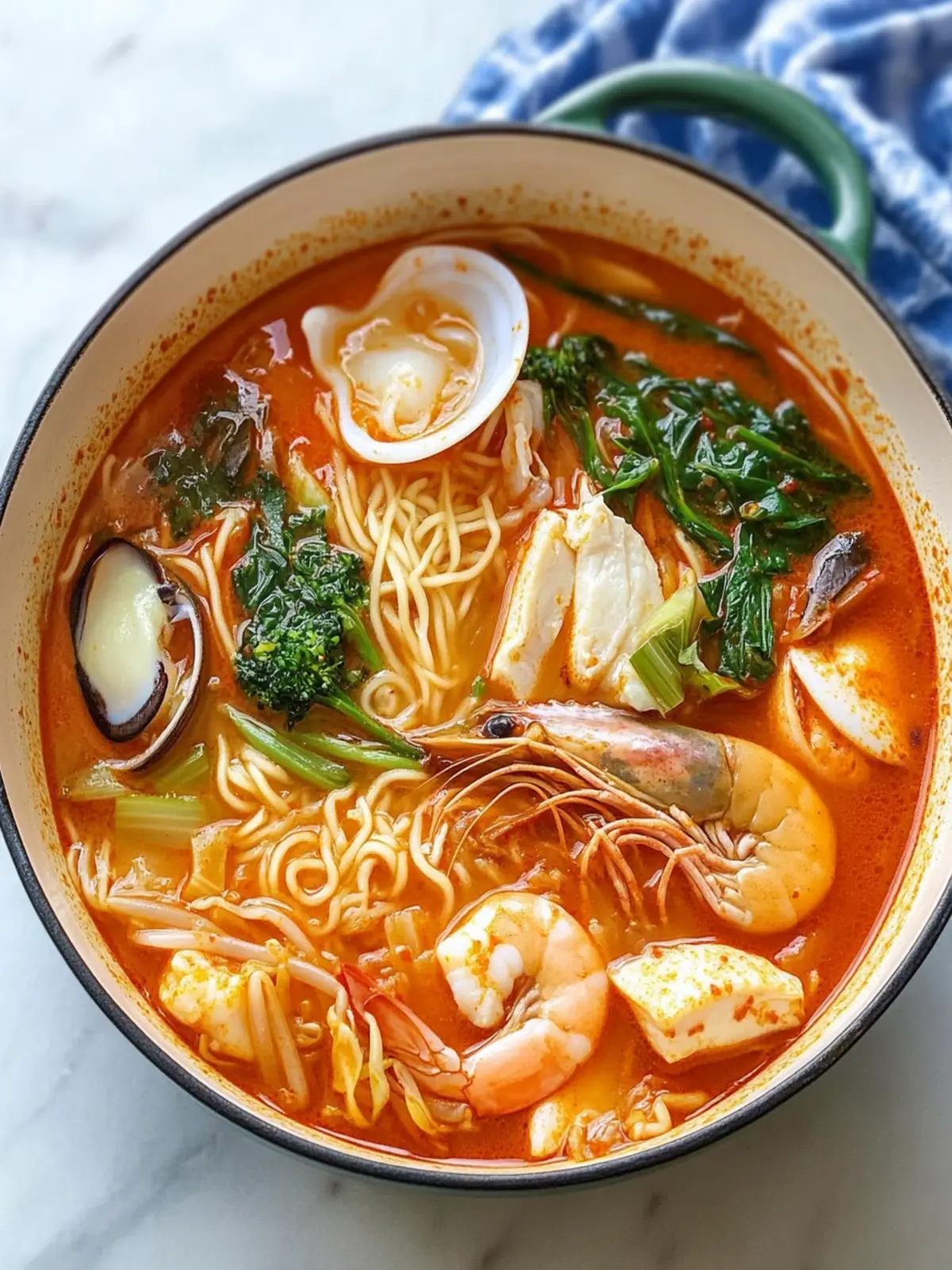
Jjamppong Variations & Substitutions
Feel free to customize this delightful soup to suit your taste buds or dietary needs!
-
Gluten-Free: Swap Korean fresh noodles for rice noodles or gluten-free noodles to enjoy Jjamppong without gluten.
-
Seafood Mix: Use any combination of seafood you love! Consider adding mussels or chunks of white fish to elevate your bowl’s flavor.
-
Vegetarian: Replace seafood with mushrooms, tofu, or extra vegetables like bell peppers and carrots, ensuring your Jjamppong is hearty and satisfying.
-
Vegan-Friendly: For a completely plant-based version, use vegetable broth instead of chicken broth, and ensure all sauces are vegan.
-
Heat Level: Adjust the spice to your preference! Start with less gochujang and gochugaru, and add more for a fiery kick that warms the soul.
-
Umami Boost: Stir in a splash of fish sauce for an authentic depth of flavor, enhancing the savory notes of your broth.
-
Creamy Twist: Add a dollop of coconut milk to the broth for a rich, creamy texture that complements the spice beautifully.
-
Herb Garnish: Try topping with fresh herbs like cilantro or basil instead of scallions to give your soup a unique, aromatic finish.
Embrace the joy of creating your Jjamppong masterpiece—each variation opens the door to new flavors and experiences!
Make Ahead Options
Preparing Jjamppong ahead of time is a game changer for busy weeknights! You can chop your vegetables, such as napa cabbage and bok choy, and refrigerate them in an airtight container for up to 3 days. Additionally, you can clean and prepare the seafood by storing it in the refrigerator, ensuring it’s ready to go when you are. When you’re ready to enjoy your delicious Jjamppong, simply sauté the aromatics, add the broth and noodles, and include your prepped seafood and veggies for a fresh, vibrant meal. This way, you’ll have that comforting seafood noodle soup on the table in no time, and just as tasty as freshly made!
How to Store and Freeze Jjamppong
Fridge: Store leftover Jjamppong in an airtight container and refrigerate for up to 3 days. Reheat gently on the stove to avoid overcooking the seafood.
Freezer: This dish can be frozen for up to 2 months. However, it’s best to freeze the broth and seafood separately from the noodles to maintain texture.
Reheating: When ready to enjoy, thaw in the fridge overnight and reheat on the stove. Add a splash of broth or water to revive the soup’s consistency.
Room Temperature: Do not leave Jjamppong at room temperature for more than 2 hours to ensure food safety.
What to Serve with Jjamppong?
As you prepare this delightful bowl of warmth, consider how to complete your meal with tantalizing additions that will make it unforgettable.
-
Steamed Rice: A fluffy bed for the rich broth, perfectly balancing the spiciness of the soup with a neutral flavor.
-
Korean Kimchi: The fermented crunch adds a spicy zing and probiotic benefits, enhancing the umami experience of your Jjamppong.
-
Asian Slaw: Crisp veggies tossed in a tangy sesame dressing bring a refreshing contrast to the hearty noodles and seafood.
-
Pickled Vegetables: Bright, tangy pickles amplify flavors and cleanse the palate, making every mouthful a new adventure.
-
Gyoza or Dumplings: These savory bites provide a delightful textural contrast and are perfect for dipping in soy sauce.
-
Coconut Milk Drink: Creamy and slightly sweet, this drink cools down the spice while offering a unique companion to your meal.
Imagine wrapping up your dining experience with a piece of soft, fluffy rice cake for a sweet finish, tying all the flavors together in a harmonious way. Enjoy!
Expert Tips for Jjamppong
- Fresh Ingredients: Always use fresh seafood and vegetables for the best flavor and texture. Frozen options can work, but fresh will elevate your Jjamppong.
- Adjust Spice: Experiment with the amount of gochujang and gochugaru to find your perfect heat level. Don’t be afraid to start with less and add more as needed!
- Seafood Variations: Feel free to swap in your favorite seafood! Mussels, crab, or even fish can be exciting alternatives in your Jjamppong.
- Avoid Overcooking: Seafood cooks quickly. Make sure to add it first and only cook briefly until opaque; this helps prevent a rubbery texture.
- Broth Flavor: For an extra depth of flavor, consider simmering the broth with aromatics like ginger or lemongrass before adding the seafood.
- Noodles Matter: Korean fresh noodles are best for this dish; they soak up the broth wonderfully. If unavailable, use another thin noodle but adjust cooking time accordingly.
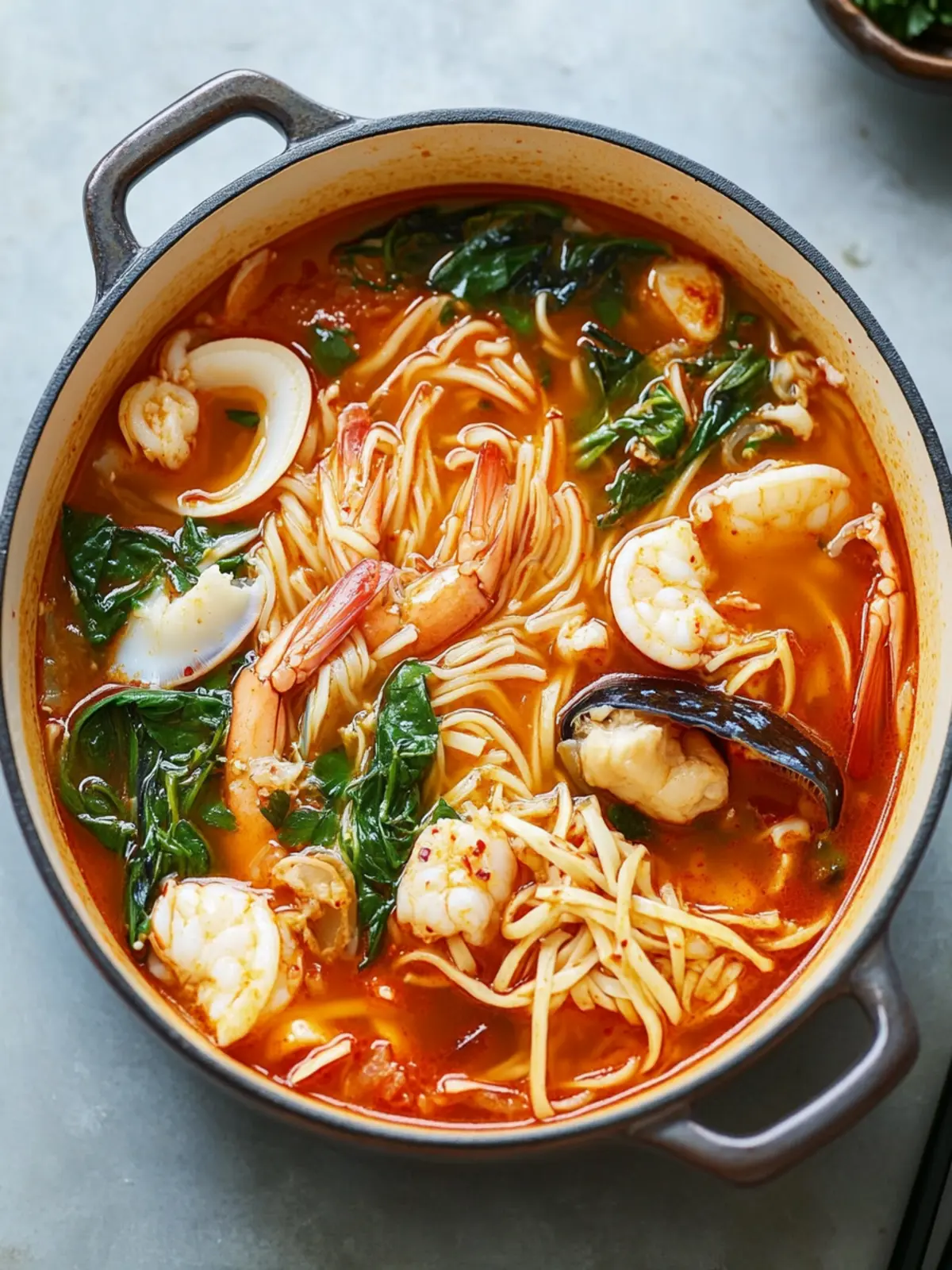
Jjamppong (Korean Seafood Noodle Soup) Recipe FAQs
How do I select the freshest seafood for Jjamppong?
When choosing seafood, look for shrimp that are firm and have a slight ocean scent. Clams should be closed tightly, while squid should have a glossy appearance. If you notice dark spots or a strong fishy smell, it’s best to avoid them. Fresh vegetables should be crisp and bright in color.
What is the best way to store leftover Jjamppong?
Absolutely! Store your leftover Jjamppong in an airtight container in the refrigerator for up to 3 days. Be sure to allow it to cool completely before sealing to prevent condensation, which can make the broth watery. When reheating, do so on the stove over low heat to avoid overcooking the seafood, which can become rubbery.
Can I freeze Jjamppong? If so, what’s the best method?
Yes, you can freeze Jjamppong for up to 2 months, but it’s best to separate the broth and seafood from the noodles. Here’s how:
- Allow the soup to cool completely.
- Portion the broth and seafood into sturdy freezer bags, removing as much air as possible before sealing.
- Store the noodles in a separate airtight container or bag.
When ready to enjoy, transfer the broth to the fridge overnight to thaw, then gently reheat on the stove. Add fresh noodles and any desired vegetables, cooking for 3-4 minutes until tender.
What if my Jjamppong is too spicy?
Very! If your Jjamppong turns out spicier than you’d like, don’t worry! You can balance the heat by adding a splash of coconut milk or cream, which will mellow the spice and add a lovely richness. Alternatively, adding more broth can also help dilute the heat while maintaining the soup’s integrity.
Are there any dietary considerations for making Jjamppong?
Jjamppong is a seafood dish, so it’s important to consider dietary restrictions like shellfish allergies. For those who are allergic, you can substitute the seafood with tofu or extra vegetables like mushrooms and zucchini to create a vegetarian option. Additionally, ensure your broth is gluten-free if that’s a concern—check the label on your chicken or bone broth, or make your homemade version.
How long can Jjamppong be left out at room temperature?
Do not leave Jjamppong at room temperature for more than 2 hours. If the temperature is above 90°F (32°C), the safe window reduces to just 1 hour. This helps prevent any foodborne illnesses and keeps your delicious meal safe to enjoy later!
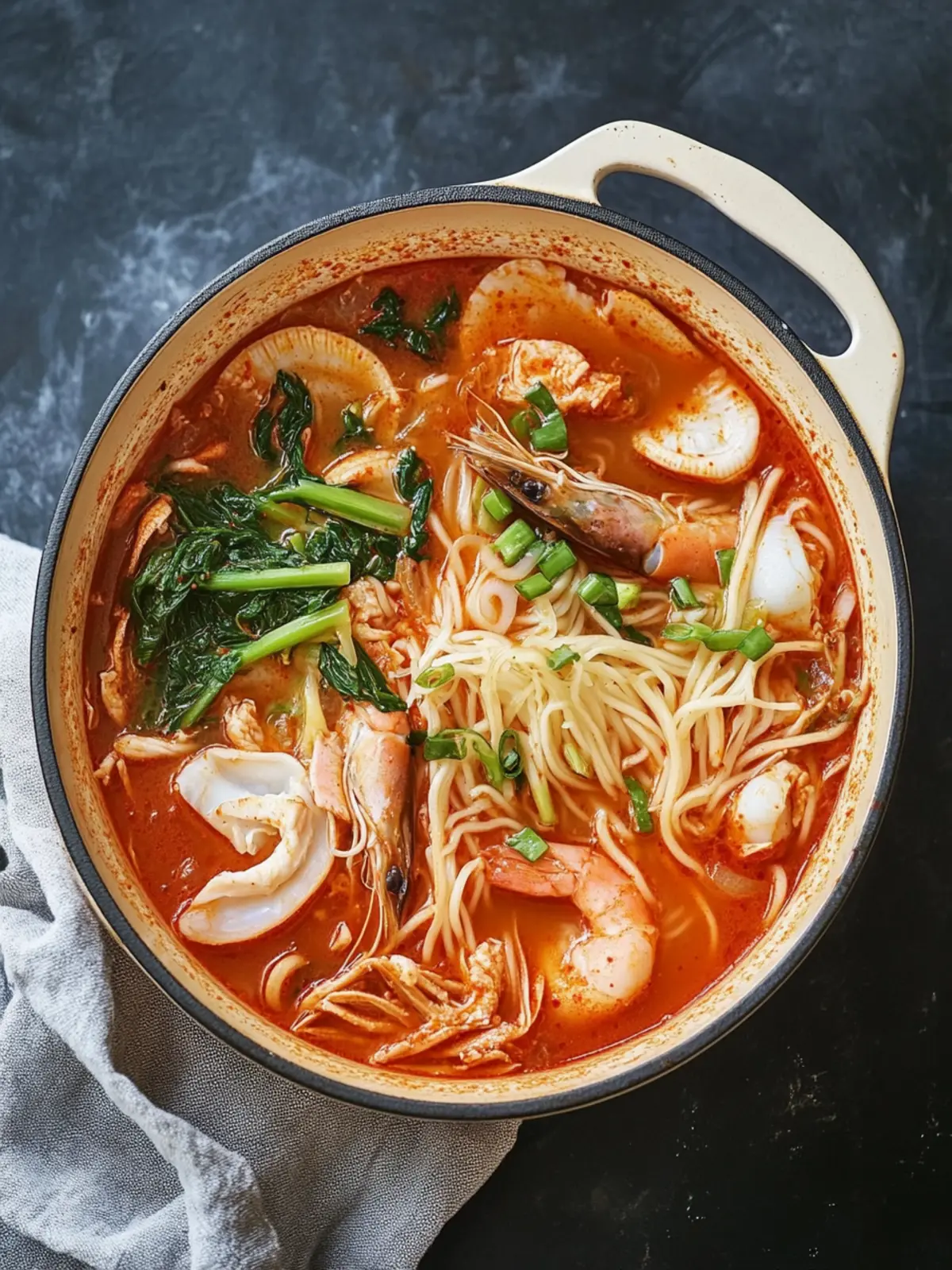
Satisfy Your Cravings with Jjamppong Korean Seafood Noodle Soup
Ingredients
Equipment
Method
- In a large pot over medium heat, add cooking oil. Once hot, toss in minced garlic and onion, sauté until fragrant and slightly golden, about 3 minutes.
- Stir in shrimp, clams, squid, and bay scallops. Cook until opaque, approximately 4-5 minutes, letting the savory aromas fill your kitchen.
- Add gochujang, gochugaru, and chicken broth to the pot. Stir gently and bring to a boil, letting the flavors meld together for about 2 minutes.
- Add Korean fresh noodles, napa cabbage, and bok choy. Cook until the noodles are tender, approximately 4-5 minutes.
- Drizzle in soy sauce and sprinkle salt, adjusting to taste. Stir gently to combine all flavors.
- Serve hot and garnish with fresh scallions.