
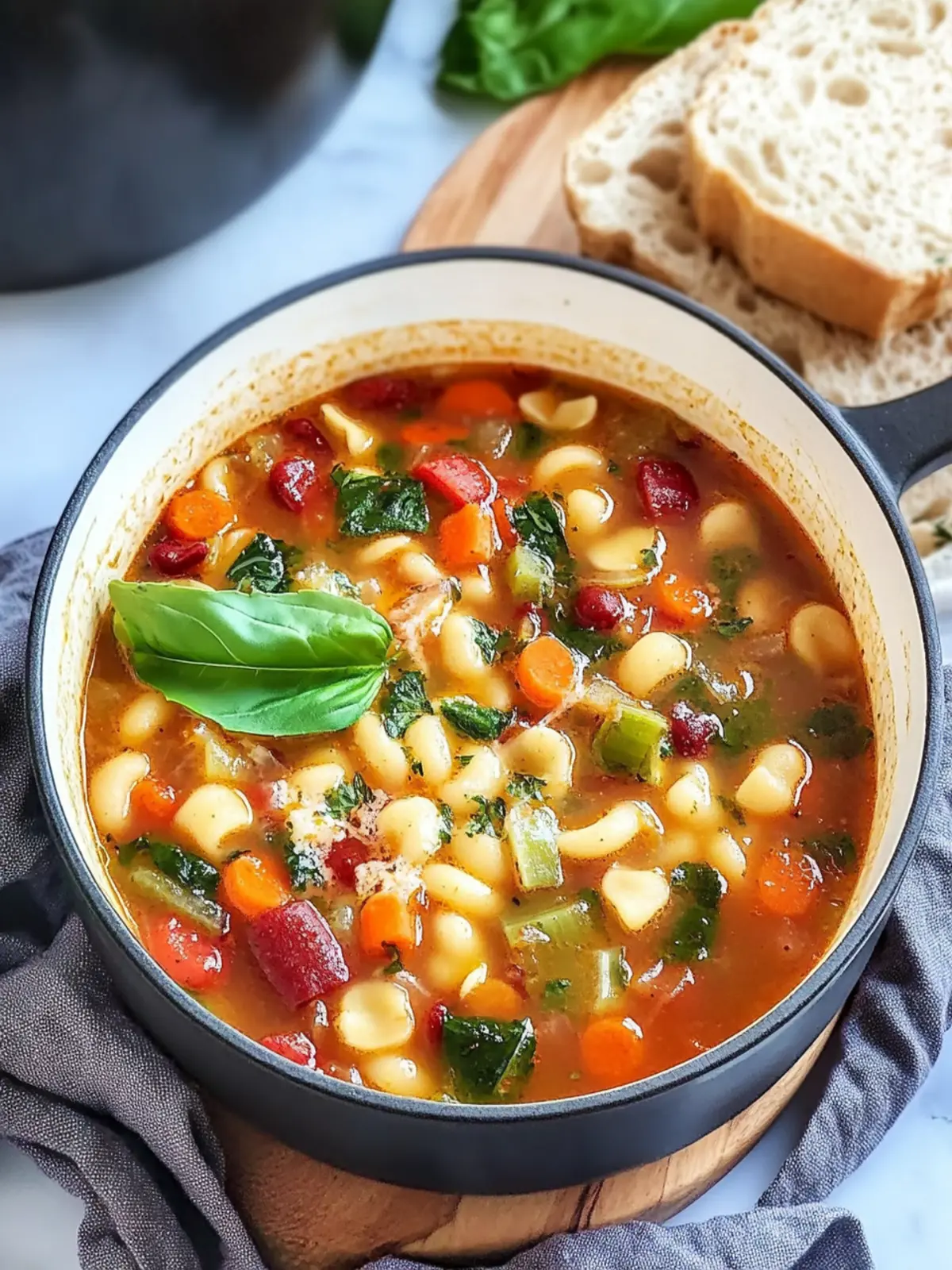
As the chill of winter settles in, there’s nothing quite like the warm embrace of a hearty bowl of minestrone soup. It brings me back to cozy evenings spent in the kitchen, the aroma of freshly sautéed garlic mingling with vibrant vegetables, and the sound of simmering broth, promising a comforting meal. This isn’t just any soup; it’s a colorful tapestry of flavors, where every spoonful brings a delightful combination of tender beans, fresh greens, and al dente pasta, all swimming in a rich, savory broth.
What makes this minestrone truly special is its versatility. With a few simple pantry staples and whatever vegetables you have on hand, you can whip up a nourishing meal that’s both easy and satisfying. Whether you’re looking to use up leftover veggies or seeking a wholesome dinner option that doesn’t require hours of preparation, this soup checks all the boxes. So grab your favorite pot, and let’s dive into this delightful recipe that’s sure to become a staple in your home!

Why is Minestrone Soup a Must-Try?
Comforting warmth: This dish wraps you in a cozy embrace, perfect for chilly nights.
Nutritious goodness: Packed with fresh vegetables, beans, and pasta, it boosts your daily nutrient intake effortlessly.
Infinite customization: Use whatever veggies or beans you have on hand to make it uniquely yours!
Quick and easy: Whip up this hearty meal in less than an hour using basic pantry staples.
Crowd pleaser: Ideal for family dinners or gatherings—everyone will love this wholesome classic!
Minestrone Soup Ingredients
• Perfect for a healthy, hearty meal!
For the Base
- Olive Oil – Provides richness and aids in sautéing vegetables; can substitute with vegetable oil if needed.
- Onion (½ cup, finely diced) – Adds aromatic flavor; yellow or white onions work best for this minestrone soup.
- Garlic (4 cloves, minced) – Enhances overall flavor; garlic powder can be an alternative if fresh isn’t on hand.
- Carrots (½ cup, peeled and diced) – Adds sweetness and texture; feel free to substitute with parsnips for a different taste.
- Celery (½ cup, diced) – Contributes freshness and crunch; leeks make a great alternative if you’re looking for a twist.
For the Broth
- Red Kidney Beans (1 can, drained and rinsed) – Provides protein and fiber; black beans or chickpeas are good substitutes.
- Diced Tomatoes (14.5-ounce can, with juice) – Forms the rich base of the broth; fresh tomatoes are a tasty replacement if in season.
- Italian Seasoning (1½ tsp) – Blends a variety of herbs that season the soup; dried basil and oregano can work well as alternatives.
- Bay Leaf (1) – Adds depth of flavor; omit if unavailable or use a pinch of dried thyme instead.
- Vegetable Stock (4 cups) – Base liquid for this nourishing soup; homemade stock enhances flavor tremendously.
For the Veggies
- Green Beans (½ cup, fresh or frozen) – Adds color and nutrition; peas can be substituted if desired.
- Zucchini (1, halved and diced) – Imparts a soft texture in the soup; try using yellow squash as a delightful alternative.
- Fresh Baby Spinach (2 cups) – Provides nutrients and vibrant color; swap with kale for an extra boost.
For the Pasta
- Ditalini Pasta (½ cup) – Adds heartiness and texture; any small pasta shape like elbow macaroni works well as a substitute.
For Seasoning
- Salt and Pepper (to taste) – Essential for seasoning; adjust according to your dietary needs and preferences.
How to Make Minestrone Soup
- Sauté the veggies: In a large stockpot or Dutch oven, heat olive oil over medium heat. Add the diced onions and sauté until they become translucent, about 3-5 minutes.
- Add garlic: Toss in the minced garlic and cook briefly until fragrant. Enjoy the lovely aroma wafting through your kitchen!
- Mix in the carrots and celery: Stir in the diced carrots and celery. Continue sautéing until they become tender, about 4-5 minutes.
- Incorporate the broth: Add the drained and rinsed kidney beans, diced tomatoes (with juice), Italian seasoning, bay leaf, and vegetable stock. Season the mix with salt and pepper to taste.
- Simmer to perfection: Bring the mixture to a gentle simmer and let it cook for about 15 minutes, allowing the vegetables to soften and the flavors to meld beautifully.
- Stir in the remaining veggies and pasta: Carefully mix in the green beans, zucchini, spinach, and ditalini pasta. Cook until the pasta is tender, which takes approximately another 10 minutes.
- Final adjustments: Taste and adjust the seasoning if necessary. Don’t forget to remove the bay leaf before serving! Enjoy your minestrone soup immediately or store the pasta separately if saving for later.
Optional: Serve with a sprinkle of Parmesan cheese for added flavor.
Exact quantities are listed in the recipe card below.
Minestrone Soup Variations
Feel free to play with this minestrone soup recipe, adding your personal touch to create a dish that warms your heart and soul.
-
Bean Variety: Swap kidney beans for cannellini or chickpeas for a different protein boost and flavor profile.
-
Greens Galore: Add kale or Swiss chard for a nutritious twist; these greens enrich the soup and add deep color.
-
Seasonal Veggies: Incorporate bell peppers or butternut squash to the mix based on what’s fresh at your local market, enhancing both taste and nutrition.
-
Spice It Up: Add a pinch of red pepper flakes or fresh jalapeños for a gentle kick, turning your minestrone into a zesty delight.
-
Herb Infusion: Replace Italian seasoning with fresh herbs like thyme or rosemary for a fragrant and lively adaptation that dances on the palate.
-
Creamy Addition: Stir in a splash of heavy cream or coconut milk in the last few minutes of cooking for a luscious, creamy version.
-
Chickpea Pasta: Use chickpea pasta instead of ditalini for a gluten-free twist that adds extra protein and a nutty flavor.
-
Roasted Veggies: Roast the zucchini and green beans before adding them for an additional layer of flavor and a delightful caramelization.
Make Ahead Options
These hearty minestrone soup components are perfect for meal prep enthusiasts! You can chop the vegetables and cook the soup base up to 24 hours in advance; simply store it in an airtight container in the refrigerator to maintain freshness. However, to keep the pasta from absorbing broth and becoming mushy, cook the ditalini pasta separately right before serving. When you’re ready to enjoy your delicious minestrone soup, gently reheat the soup on the stovetop and stir in the freshly prepared pasta for the best texture. This way, you can savor a comforting bowl of soup any busy night without the fuss!
Expert Tips for Minestrone Soup
- Pasta Perfection: To keep leftover pasta from soaking up the broth, cook it separately. Add it to the soup when serving for the best texture.
- Seasonal Veggies: Customize your minestrone soup by using whatever fresh vegetables are in season. This not only reduces waste but also elevates flavor.
- Batch Cooking: If planning to make ahead, store the soup without pasta. This way, the sauce remains rich, and the pasta stays al dente.
- Flavor Boost: Enhance the broth by simmering with homemade vegetable stock instead of water. A great way to deepen the taste of your minestrone soup!
- Adjusting Thickness: If your soup is too thick, add more vegetable stock or water to reach your desired consistency. Enjoy that hearty, warming goodness!
How to Store and Freeze Minestrone Soup
- Fridge: Store your minestrone soup in an airtight container in the refrigerator for up to 3 days. This helps preserve its fresh flavors and delightful textures.
- Freezer: For longer storage, freeze the soup in freezer-safe containers for up to 3 months. Be sure to leave some space at the top, as it will expand when frozen.
- Reheating: To reheat, gently warm the soup on the stovetop over medium heat, adding a splash of water or vegetable stock if it has thickened too much.
- Separate Storage: If you plan to store leftovers, keep the pasta separate from the soup to prevent it from becoming mushy. Add the pasta just before serving!
What to Serve with Minestrone Soup?
As you prepare to enjoy a bowl of this heartwarming soup, consider delightful options that will elevate your dining experience.
- Crusty Bread: Perfect for dunking, a slice of warm, crusty bread enhances the experience, soaking up those rich flavors.
- Italian Side Salad: A fresh salad with mixed greens, cherry tomatoes, and a light vinaigrette balances the hearty soup beautifully.
Pairing your minestrone with these options not only creates a cohesive meal but also adds layers of flavor and texture that will delight your palate. Consider finishing your meal with a light dessert to cleanse the palate, such as a lemon sorbet. This bright addition offers a refreshing contrast to the comfort of the soup, leaving you feeling satisfied yet invigorated.
Minestrone Soup Recipe FAQs
How do I choose the right vegetables for my minestrone soup?
Absolutely! Choosing fresh, seasonal vegetables enhances flavor and nutrition. Look for firm, unblemished produce. Avoid any with dark spots or signs of wilting. Carrots should be vibrant orange, zucchini should be smooth, and leafy greens like spinach should be crisp and dark green.
How should I store leftover minestrone soup?
After enjoying your delicious minestrone soup, store any leftovers in an airtight container in the refrigerator for up to 3 days. Make sure it’s cooled down before sealing. This helps maintain its wonderful flavors and fresh ingredients.
Can I freeze minestrone soup, and if so, how?
Very! To freeze minestrone soup, allow it to cool completely, then pour it into freezer-safe containers, leaving about an inch of space at the top to account for expansion. It can be frozen for up to 3 months. When you’re ready to enjoy it again, simply thaw overnight in the fridge and reheat gently on the stovetop, adding a splash of water or vegetable stock if needed.
What should I do if my soup is too thick?
If your minestrone soup turns out thicker than you’d like, just add more vegetable stock or water—start with about half a cup at a time and stir well until you reach your desired consistency. Simmer for a few minutes to allow the flavors to meld back in.
Is this soup suitable for those with dietary restrictions?
Absolutely! This minestrone soup is vegetarian and can easily be made vegan by ensuring your vegetable stock is plant-based. If you have allergies, be sure to check for any specific ingredients, particularly canned goods. If you have a bean allergy, you can substitute with lentils or omit them altogether and add more veggies to maintain texture and nutrition.
Can I use dried beans instead of canned beans in this recipe?
Yes! If you prefer using dried beans, soak them overnight in water, then cook until tender before adding them to the minestrone soup. You might want to prepare them separately or add them to the soup earlier on, so they have enough time to soften in the broth. Just be mindful to adjust the cooking time accordingly!

Wholesome Minestrone Soup Brimming with Fresh Veggies
Ingredients
Equipment
Method
- Heat olive oil in a large stockpot over medium heat. Add diced onions and sauté until translucent, about 3-5 minutes.
- Add minced garlic and cook briefly until fragrant.
- Stir in diced carrots and celery. Continue sautéing until tender, about 4-5 minutes.
- Add kidney beans, diced tomatoes (with juice), Italian seasoning, bay leaf, and vegetable stock. Season with salt and pepper.
- Bring to a gentle simmer and cook for about 15 minutes, allowing vegetables to soften and flavors to meld.
- Mix in green beans, zucchini, spinach, and ditalini pasta. Cook until pasta is tender, about 10 minutes.
- Taste and adjust seasoning if necessary. Remove bay leaf before serving.